What Is Line Voltage?
Line voltage is the electrical potential supplied directly by a building’s branch circuit to power equipment and fixtures. In indoor lighting, line voltage commonly feeds luminaires, switches, and dimmers through the building wiring. The term distinguishes full circuit voltage from low-voltage power supplied through a transformer or driver.
Quick Facts About Line Voltage
Category
Electrical measurement and supply type
Used for
Indoor lighting and branch-circuit equipment
Common confusion
Confused with low-voltage power
Also called
Mains Voltage, Supply voltage
Often discussed with
Indoor Lighting Installation
Key Takeaways About Line Voltage
- Line voltage comes directly from a branch circuit.
- Lighting fixtures and switches may connect to it.
- Line voltage is not the same as low voltage.
How Line Voltage Works
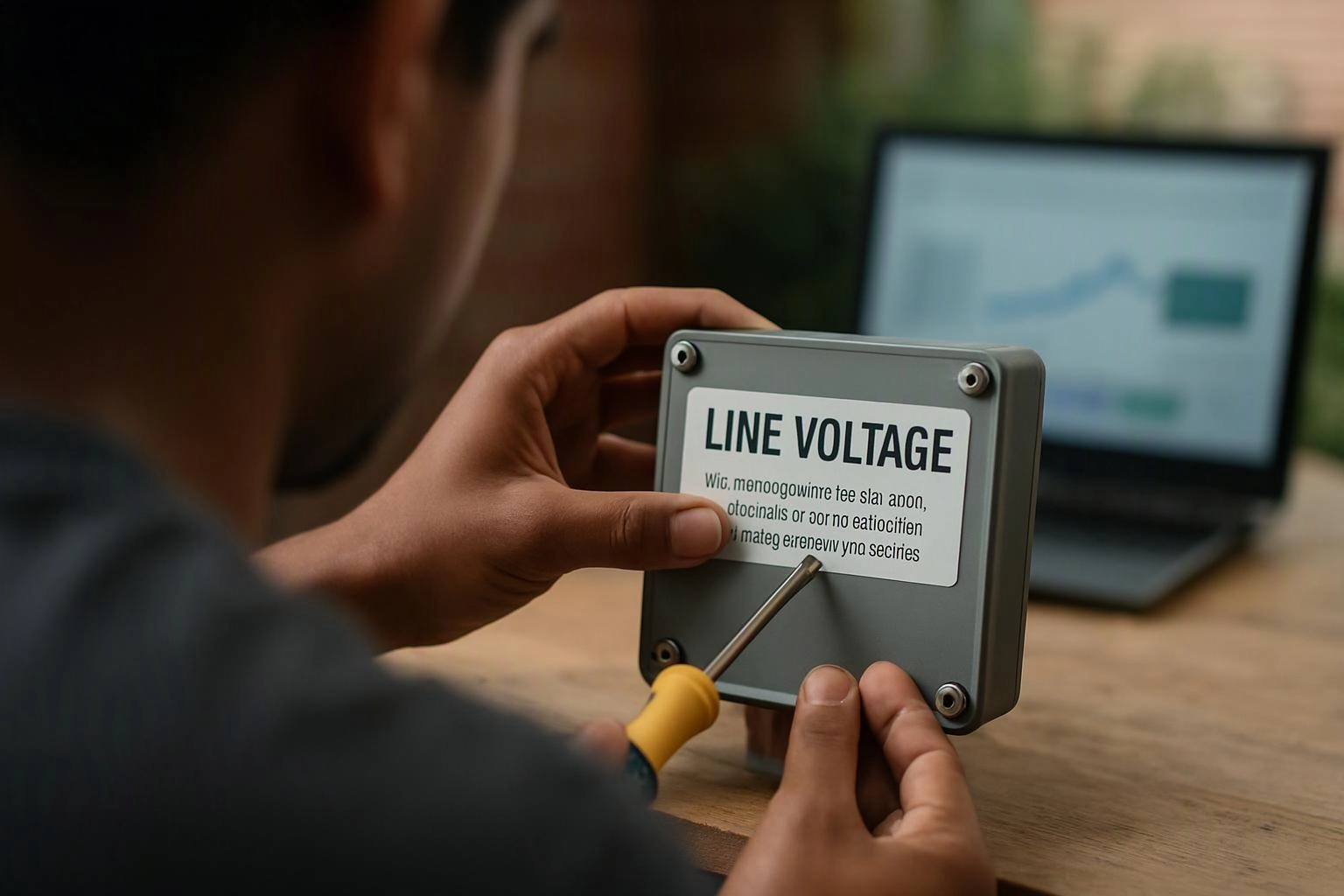
Line voltage travels from the electrical panel through branch-circuit conductors to a connected device. A wall switch controls the path to a light fixture, while a dimmer changes the power delivered to a compatible load. The circuit also includes a neutral path when the fixture design requires one.
Related glossary terms: Hot Conductor, Neutral Wire, Voltage Drop.
Indoor lighting may use line-voltage fixtures or a separate LED driver that changes incoming power for the light source. A line-voltage fixture connects to the building circuit as designed, while a low-voltage fixture needs a transformer or driver. Electricians check the circuit conductors, connections, and device ratings so the lighting system operates as intended.
From the Service Electric team
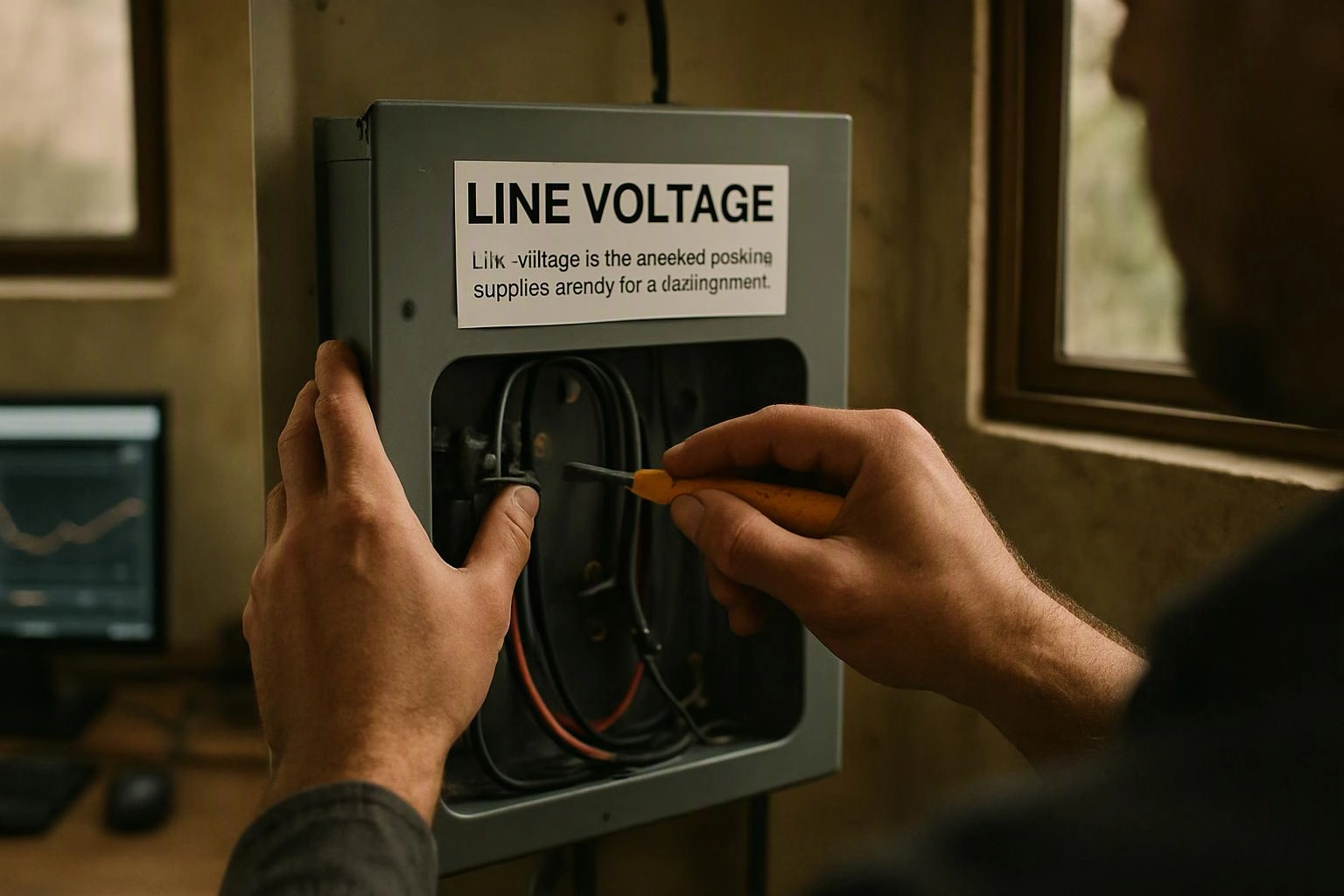
When we install indoor lighting, we identify the circuit supplying the fixture and check the conductors at the switch box and light location. We also verify that the fixture, dimmer, and wiring method are compatible with the available line voltage. This check helps us separate a supply issue from a fixture or control issue.
Line Voltage in Practice: A Real-World Example
A homeowner wants a new ceiling light in a living room. The light connects to an existing branch circuit through a wall switch, so the fixture must be rated for the line voltage supplied by that circuit.
Related Services
Related Terms
Hot Conductor
Hot Conductor is an energized wire that carries electrical potential from a source toward a load…
Neutral Wire
A neutral wire is a current-carrying conductor that completes the return path from an electrical load…
Voltage Drop
Voltage drop is the reduction in electrical pressure that occurs as current travels through a conductor…
Dimmer Switch
A Dimmer Switch is a wall control that adjusts the brightness of a connected light fixture…
Service Electric
Have Questions About Line Voltage?
Contact Service Electric for practical guidance on Line Voltage and related 24 hour electrician work in Victoria.