How to Prepare for an Emergency Electrical Repair Visit
Emergency electrical repair preparation means protecting people from hazards, preserving useful information, clearing safe access, and explaining what happened. Service Electric uses those details to assess the issue, identify the repair, and explain the work and quote.
Request an EstimateWhat to Do Before Emergency Electrical Help Arrives
Emergency electrical repair preparation starts with protecting people, avoiding contact with unsafe equipment, and preserving the conditions that help Service Electric assess the problem.
Electrical hazards can include smoke, sparks, a burning odor, exposed wiring, or a warm outlet. Move people and pets to a safe distance, and do not touch damaged equipment.
Smoke, sparks, and a burning odor can signal a serious electrical emergency. Leave the area and contact emergency services if there is an active fire or immediate danger to people.
When Emergency Repair and Electrical Safety Checks Belong Together
Emergency electrical repair and electrical safety checks work together when the immediate fault may indicate a wider wiring, circuit, or equipment problem.
An urgent repair can restore safe operation, but the cause may still involve connected components. Our team uses the following situations to decide whether a broader electrical inspection belongs with the immediate repair:
We first address the condition that creates the immediate risk. We then explain whether additional checks are needed to define the repair scope safely.
What Information Helps Us Diagnose the Electrical Problem?
Information about when the problem began, what equipment is affected, and what changed beforehand helps Service Electric narrow the electrical fault safely.
Describe the symptom timeline in plain terms. Note whether the issue started suddenly, followed a tripped breaker, or changed after an appliance was used.
Tell us which rooms, outlets, switches, and appliances are affected. If you know the affected circuit or can identify the breaker without approaching an unsafe panel, share that detail with our team.
Recent electrical work can help us understand changes to the wiring or equipment. Storm damage and water intrusion can also change the order of our inspection and fault diagnosis.
Photos can preserve useful information when they can be taken from a safe position. Do not remove covers, handle exposed wiring, or move equipment to get a better image.
How Service Electric Handles the Emergency Electrical Visit
Service Electric begins by reviewing the reported symptoms, checking the affected electrical components, isolating the fault, and explaining the repair plan before work proceeds.
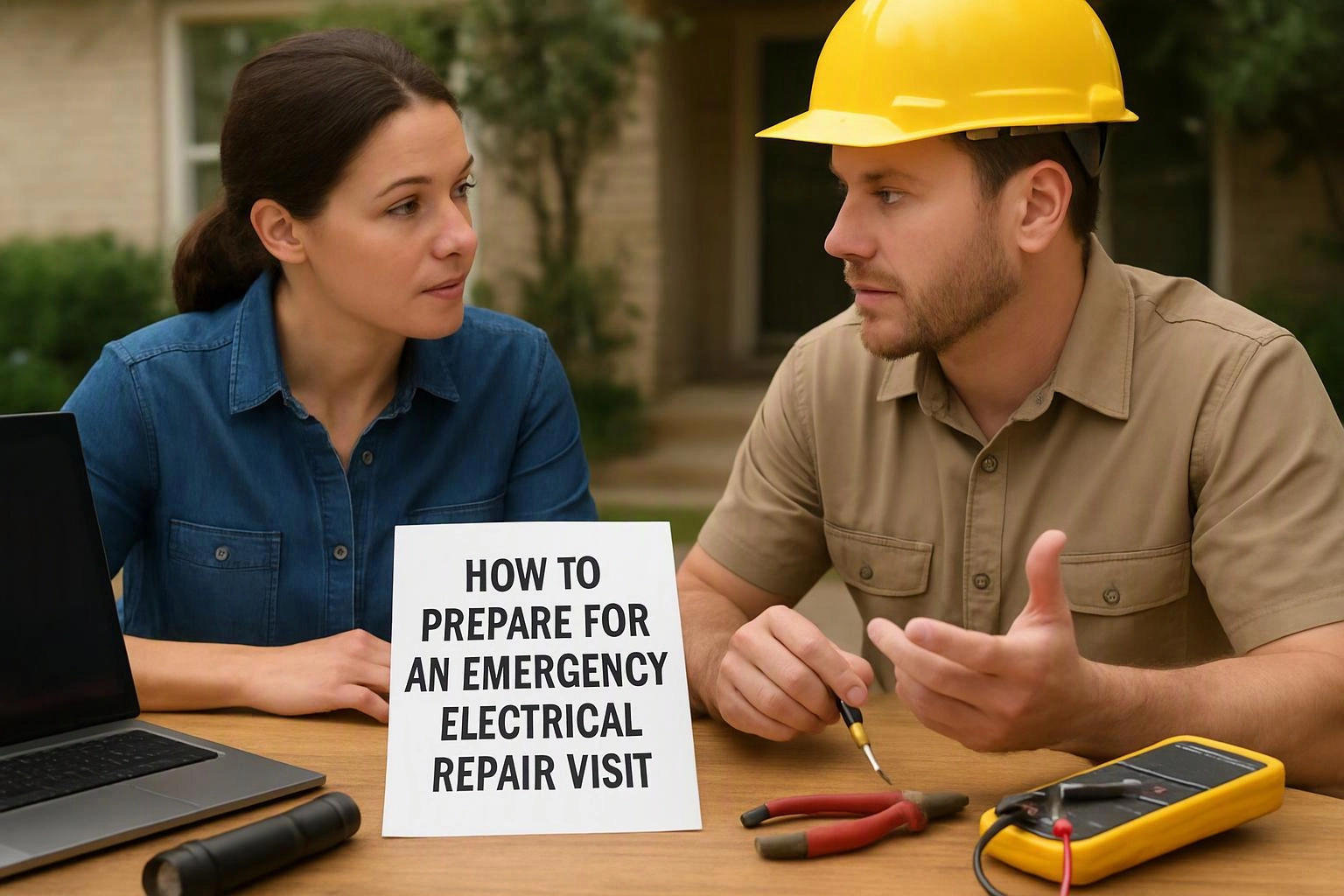
Our team starts with electrical safety and safe access. We review what happened, identify immediate hazards, and decide whether the power needs to remain shut off during the inspection.
We then complete an electrical inspection of the relevant panel, circuit, wiring, outlet, switch, or appliance connection. Fault isolation helps us separate the damaged component from related conditions that may affect safe operation.
After the electrical diagnosis, we explain the repair plan and repair scope in clear terms. The quote reflects the fault, the parts required, access conditions, and the work needed to restore safe operation.
How Emergency Repair and Follow-Up Work Fit Together
Emergency repair addresses the immediate electrical hazard first, while follow-up checks determine whether related components require additional work; the final cost depends on the fault, access, parts, and repair scope.
These services connect through a clear sequence. Our team uses the first repair findings to decide whether a temporary safety measure is enough or whether the affected component needs replacement.
Cost drivers include the source of the fault, the parts required, the condition of connected equipment, and how accessible the repair area is. We explain those factors in the quote before additional work proceeds.
What to Ask Before Electrical Repair Work Begins
Before electrical repair work begins, ask Service Electric what caused the fault, what the repair includes, what safety risks remain, and how the quote reflects the work.
Ask whether the repair diagnosis points to a single failed component or a wider circuit condition. Our team can explain the evidence from the inspection and the steps used for fault isolation.
Ask what the work scope includes, which replacement parts are needed, and whether power restoration depends on another safety check. We also explain any equipment that must remain disconnected.
Ask how the quote covers the repair plan, access needs, parts, and follow-up work. Clear questions help you understand the decision before we begin the approved repair.
How to Make the Emergency Electrical Appointment More Efficient
An emergency electrical appointment is more efficient when the affected area is safely accessible and the customer has the relevant equipment, symptom, and repair-history details ready.
Make safe property access available without entering the hazard area. If the electrical panel is safe to approach, keep its location clear so our crew can inspect it without moving stored items.
Have appliance information ready when a specific electrical appliance is involved. The model, location, recent symptoms, and whether the appliance was connected when the fault began can help with diagnosis.
Keep photos available if they were taken safely. Also share recent electrical work, storm damage, water intrusion, and any previous breaker or wiring concerns.
Provide accurate contact details and explain who can give access to the property. These details help us coordinate the visit and confirm the repair plan with the right person.
Questions About Preparing for Emergency Electrical Repair
What should I turn off before an emergency electrician arrives?
Service Electric recommends turning off an affected circuit only when the circuit breaker is safely reachable and clearly identified. Do not approach a smoking, sparking, hot, or water-exposed panel, and do not touch damaged equipment.
Should I take pictures of an electrical problem before the repair visit?
Yes, photos can help preserve useful information when you can take them from a safe distance. Do not remove covers, handle exposed wiring, or enter a hazardous area to take a picture.
What should I do if the electrical problem involves water?
Water near wiring or electrical equipment requires people to leave the area and avoid contact with the water, panel, outlets, switches, and appliances. Do not operate a shutoff that requires entering the wet area; contact emergency services if there is immediate danger.
What should I have ready when calling for emergency electrical repair?
Have the symptom timeline, affected rooms or equipment, panel information that can be gathered safely, recent electrical work, storm damage, water intrusion, photos, property access details, and repair history ready for our team.
Prepare for Emergency Electrical Repair With Service Electric
Emergency electrical repair is easier to assess when you protect people, preserve safe information, and provide clear property access. Service Electric reviews the symptoms, isolates the fault, explains the repair scope, and provides a quote for the work needed.
Contact Service Electric to discuss the electrical emergency and arrange the next step.
Related Resources
How Much Does Emergency Electrical Repair Cost?
What It SolvesWhen to Call a 24-Hour Electrician in Victoria, Texas
What It SolvesElectrical Problems After Power Interruptions, Water Exposure, or Severe Weather
What It SolvesBest Emergency Electrical Repair Options for Urgent, Budget & Long-Term Projects in Victoria