
What Is an Arc Fault?
An arc fault is an unintended electrical discharge across a gap or damaged connection, producing heat that can damage wiring and nearby materials. The discharge may occur when conductors loosen, insulation wears away, or connections become compromised. Arc faults differ from ordinary overloads because current can remain below a standard breaker’s trip level.
Quick Facts About Arc Fault
Category
Electrical fault condition
Used for
Electrical safety inspection findings
Common confusion
Often confused with an overload or short circuit
Also called
Arc Flash
Often discussed with
Electrical Safety Inspection, Electrical Troubleshooting
Key Takeaways About Arc Fault
- Arc faults create electrical discharge across a damaged or unintended gap.
- A standard breaker may not respond when current stays within its range.
- Arc faults are not the same as overloads or short circuits.
How Arc Fault Works
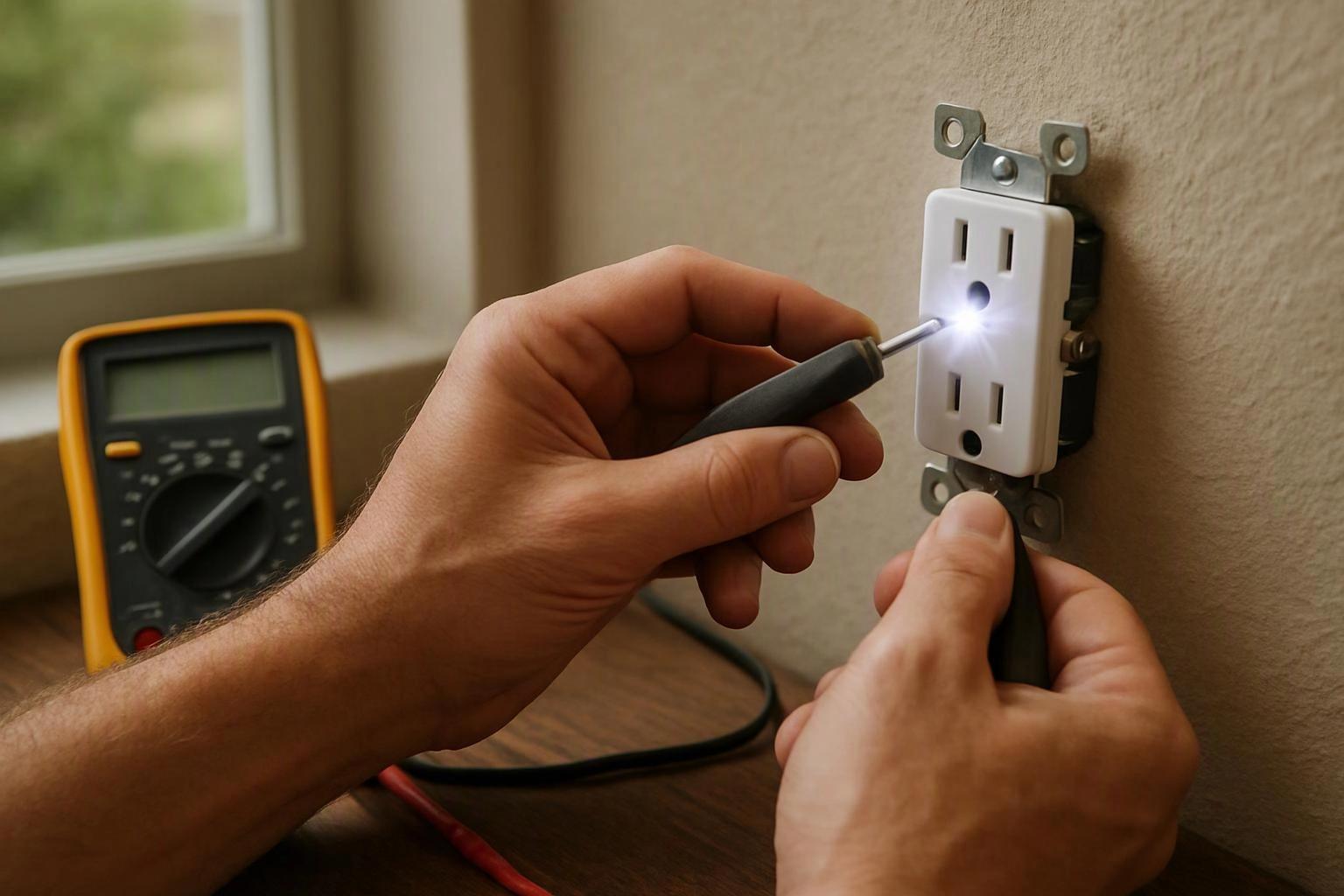
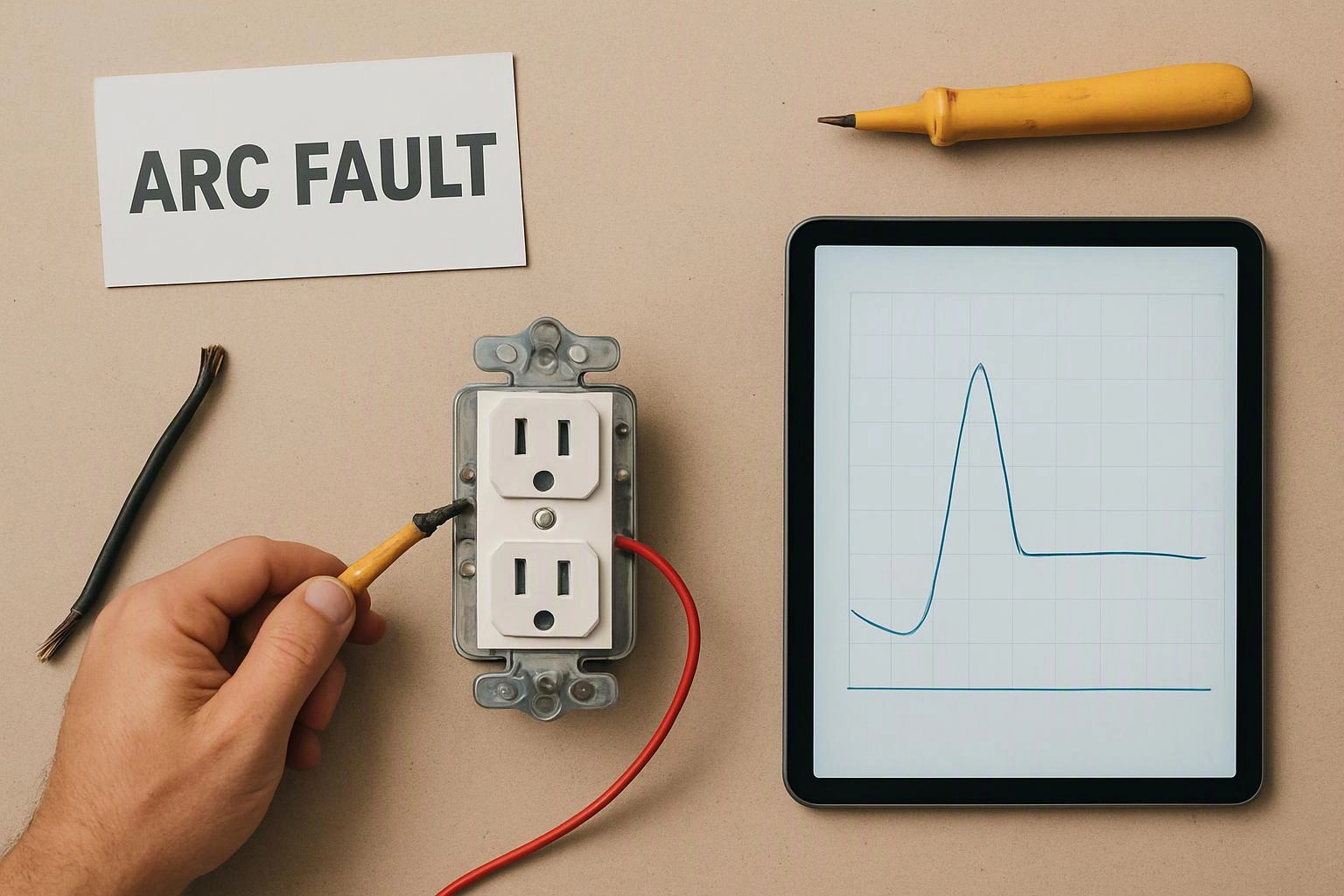
An arc fault begins when electrical energy crosses an unintended gap between conductive parts. The gap may develop at a loose terminal, damaged insulation, or a deteriorated connection. Heat from the discharge can mark conductors, damage insulation, and affect nearby wiring.
Related glossary terms: Arc-Fault Circuit Interrupter, Short Circuit, Circuit Load.
Arc-fault protection monitors the electrical pattern for signs that distinguish an unwanted discharge from normal current flow. An Arc Fault Circuit Interrupter can interrupt power when that pattern indicates a fault. Inspection work also examines connections, conductor condition, panel components, and signs of heat or carbon damage. These observations help separate an arc fault from a short circuit or an overloaded circuit.
From the Service Electric team
When we inspect for arc-fault conditions, we look beyond the breaker and examine accessible connections, conductor insulation, and visible heat damage. We also review nuisance trips in context, because a recurring trip can point to a wiring defect, a protective-device issue, or another circuit problem that needs testing.
Arc Fault in Practice: A Real-World Example
During an Electrical Safety Inspection, a loose connection behind an outlet may produce intermittent arcing when the circuit carries power. The inspection can document heat marks or damaged insulation and identify the affected wiring for further testing.
Related Terms
Arc-Fault Circuit Interrupter
An Arc-Fault Circuit Interrupter is a protective device that detects electrical arcing and disconnects power before…
Short Circuit
Short Circuit is an unintended electrical path with very low resistance that lets current bypass part…
Circuit Load
Circuit Load is the electrical demand placed on a branch circuit by connected devices and equipment…
Service Electric
Have Questions About Arc Fault?
Contact Service Electric for practical guidance on Arc Fault and related 24 hour electrician work in Victoria.