
What Is Circuit Load?
Circuit Load is the electrical demand placed on a branch circuit by connected devices and equipment. The demand depends on the power each device needs while operating. A circuit load helps determine whether existing conductors, connections, and protective devices can serve the equipment without excessive heating, nuisance tripping, or unstable operation.
Quick Facts About Circuit Load
Category
Electrical measurement
Used for
Circuit troubleshooting and planning
Common confusion
Load is not voltage
Also called
Electrical Load, Circuit Demand
Often discussed with
Electrical Troubleshooting
Key Takeaways About Circuit Load
- Load changes as connected equipment operates.
- Large or simultaneous loads can trip a breaker.
- Circuit load is not the same as voltage.
How Circuit Load Works
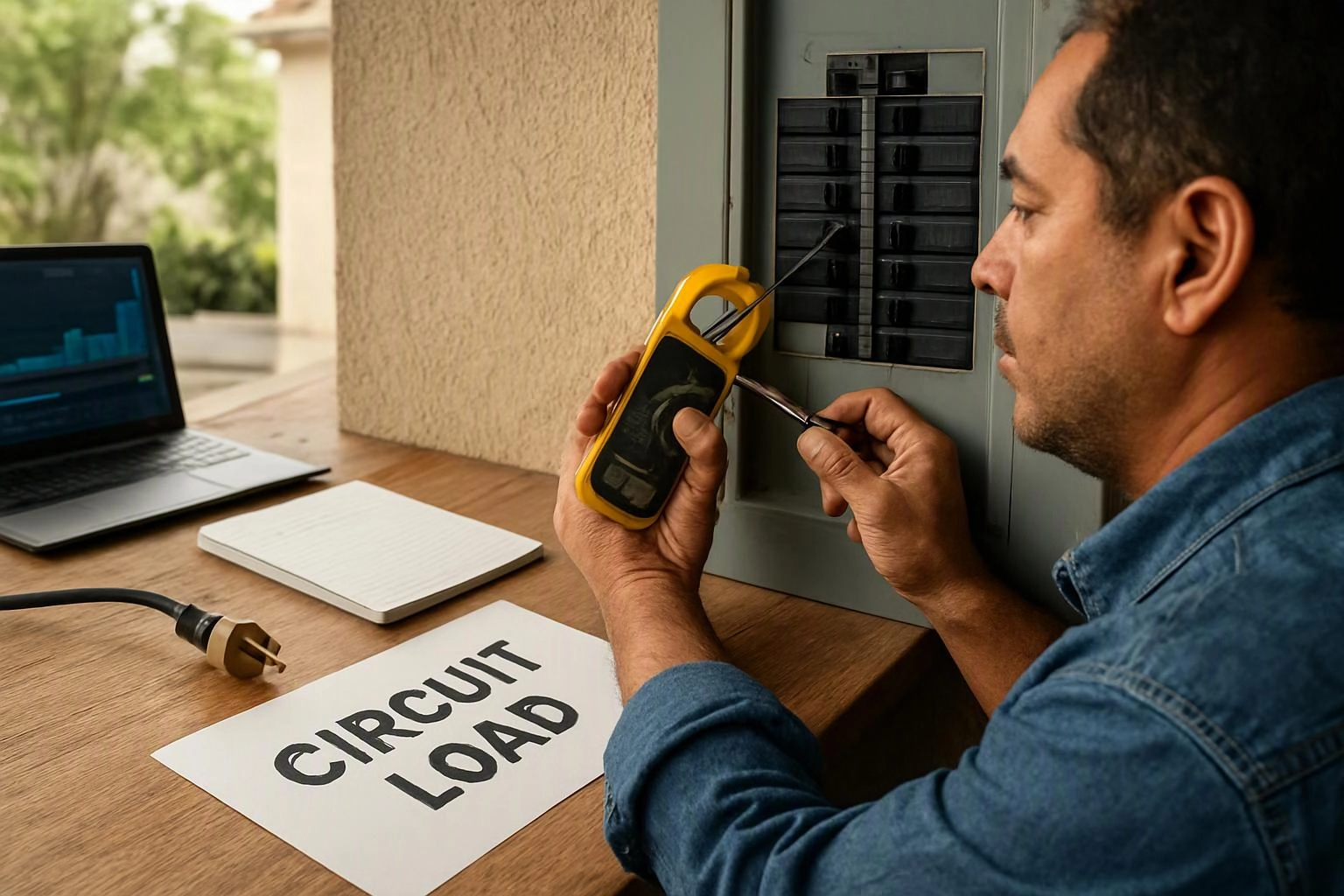
Circuit Load develops as connected equipment draws current from a circuit. Lights, receptacles, appliances, and motors may each add demand. The total changes when equipment starts, stops, or operates at a different level. A circuit with several active devices may behave differently from the same circuit with only one device running.
Related glossary terms: Load Calculation, Short Circuit, Voltage Drop.
An electrician checks the connected equipment, conductor condition, breaker rating, and measured current as part of troubleshooting. A circuit breaker may open when demand becomes excessive or when another electrical fault occurs. The electrical panel identifies the circuit path, but panel labels alone do not show the demand present during operation.
From the Service Electric team
When we troubleshoot a circuit, we identify the connected equipment and observe the circuit while the suspected load operates. We compare measured current with the circuit components and inspect connections for heat, damage, or signs of an intermittent problem.
Circuit Load in Practice: A Real-World Example
A kitchen circuit may operate normally with lights and a small appliance, then trip when a larger appliance starts. Troubleshooting checks the active equipment, circuit path, connections, and breaker to find the source of the excessive demand.
Related Services
Related Terms
Load Calculation
Load Calculation is the process of estimating the electrical demand that a building and its circuits…
Short Circuit
Short Circuit is an unintended electrical path with very low resistance that lets current bypass part…
Voltage Drop
Voltage drop is the reduction in electrical pressure that occurs as current travels through a conductor…
Wire Gauge
Wire Gauge is a standardized way to describe a conductor’s thickness and current-carrying capacity. The gauge…
Service Electric
Have Questions About Circuit Load?
Contact Service Electric for practical guidance on Circuit Load and related 24 hour electrician work in Victoria.