
What Is Wire Gauge?
Wire Gauge is a standardized way to describe a conductor’s thickness and current-carrying capacity. The gauge designation helps identify whether a wire suits a circuit’s load, installation method, and expected voltage drop. Smaller gauge numbers generally indicate thicker conductors, while larger numbers indicate thinner conductors within the American Wire Gauge system.
Quick Facts About Wire Gauge
Category
Electrical measurement
Used for
Selecting conductors for circuits
Common confusion
Gauge number is not voltage
Also called
Wire Size, American Wire Gauge
Often discussed with
Electrical Wiring Installation
Key Takeaways About Wire Gauge
- Gauge numbers describe conductor size within a standard system.
- Circuit load and installation conditions guide wire selection.
- Wire gauge is not the same as voltage rating.
How Wire Gauge Works
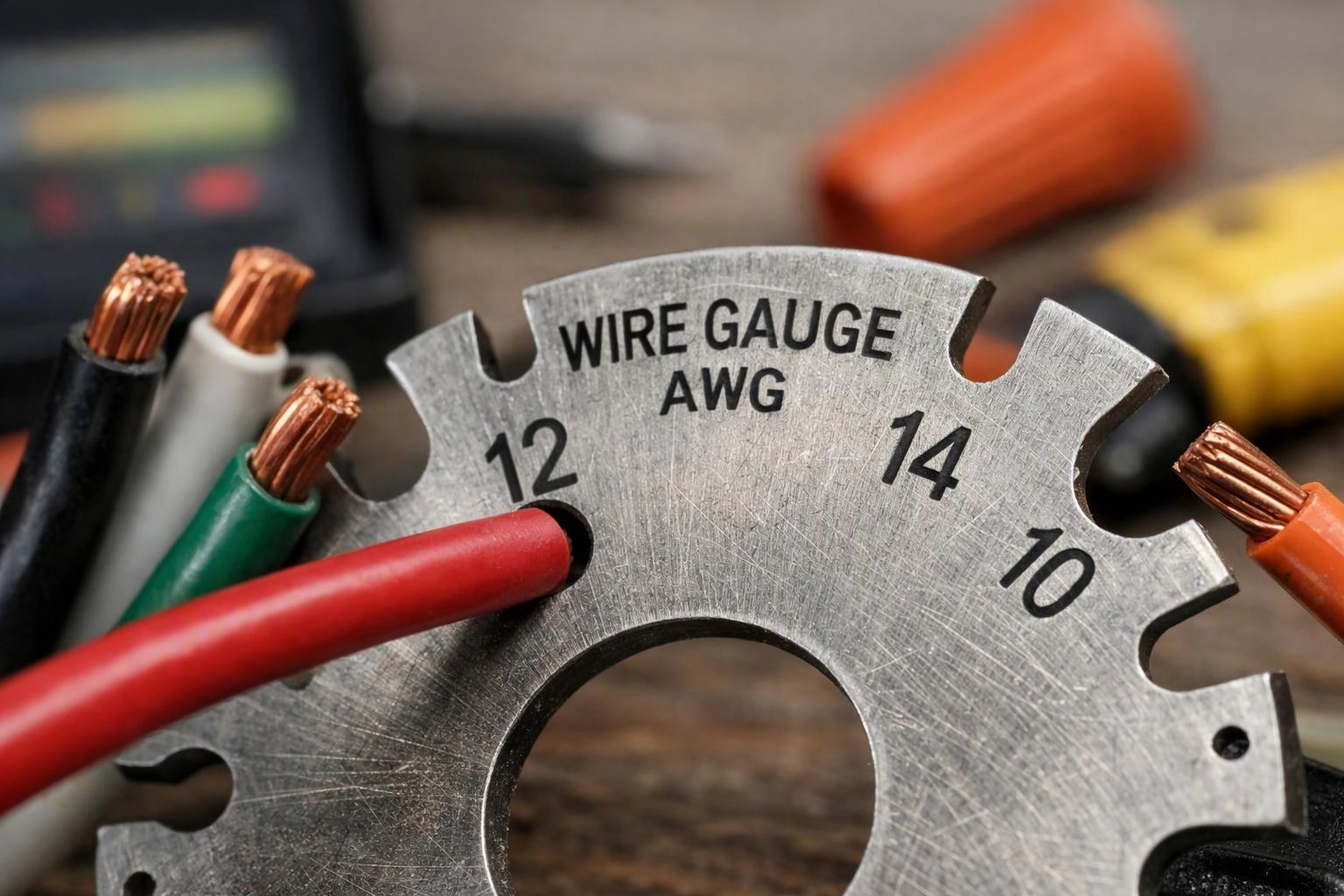
Wire Gauge describes conductor size through a standard numbering system. A thicker conductor has more metal for carrying electrical current and generally has a smaller gauge number. A thinner conductor has less metal and generally has a larger gauge number. The gauge does not describe insulation thickness.
Related glossary terms: Circuit Load, Voltage Drop, Hot Conductor.
Electricians select gauge by reviewing the circuit load, conductor material, circuit length, and installation conditions. A circuit serving a high-demand appliance may need a thicker conductor than a short circuit serving a small light. Voltage Drop can become a concern when conductors run long distances, since resistance can reduce voltage at the equipment. The selected wire also needs insulation suited to the installation environment.

From the Service Electric team
When we install wiring, we review the circuit load and the planned path before selecting a conductor. We also check the existing wire, terminals, and connections so the new installation works as a complete system. Our team treats gauge selection as part of the wiring design, not as an isolated label.
Wire Gauge in Practice: A Real-World Example
A new kitchen circuit may need a conductor sized for the connected equipment and the distance from the panel. During Electrical Wiring Installation, the selected wire gauge must match the circuit design and the terminals accepting the wire.
Related Services
Related Terms
Circuit Load
Circuit Load is the electrical demand placed on a branch circuit by connected devices and equipment…
Voltage Drop
Voltage drop is the reduction in electrical pressure that occurs as current travels through a conductor…
Hot Conductor
Hot Conductor is an energized wire that carries electrical potential from a source toward a load…
Neutral Wire
A neutral wire is a current-carrying conductor that completes the return path from an electrical load…
Service Electric
Have Questions About Wire Gauge?
Contact Service Electric for practical guidance on Wire Gauge and related 24 hour electrician work in Victoria.