
What Is Electrical Bonding?
Electrical Bonding is the practice of connecting conductive metal parts so they share the same electrical potential and provide a controlled path for fault current. The connections may join equipment enclosures, metal raceways, service components, and grounding conductors. Bonding supports coordinated operation between the electrical system and its grounding paths.
Quick Facts About Electrical Bonding
Category
Electrical safety practice
Used for
Connecting conductive metal parts
Common confusion
Bonding is not the same as grounding
Also called
Bonding, Electrical bonding jumper
Often discussed with
Electrical Safety Inspection
Key Takeaways About Electrical Bonding
- Bonding joins metal parts into one electrical system.
- Grounding connects the system to earth.
- A bonding jumper is not the same as a ground rod.
How Electrical Bonding Works
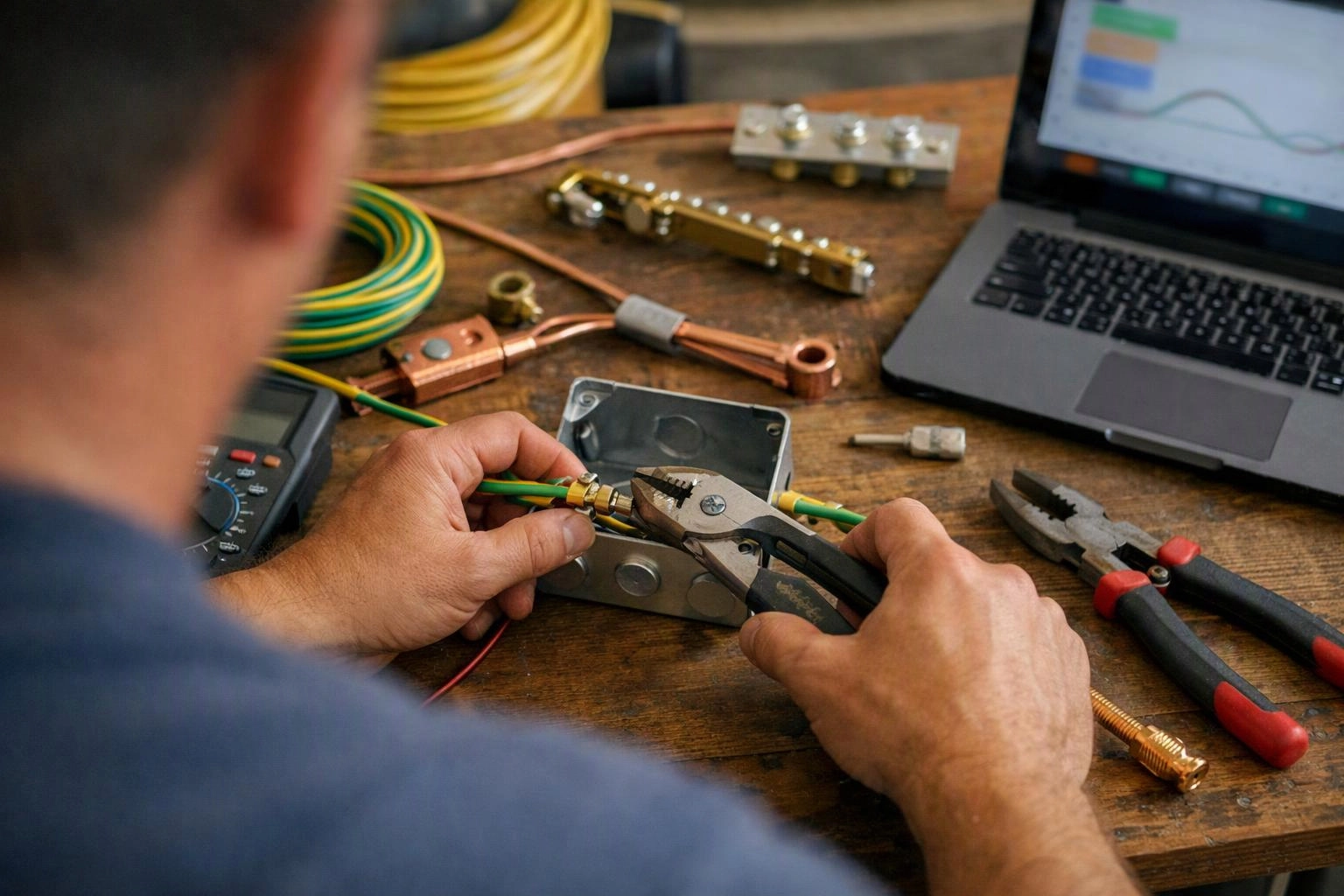
Electrical Bonding creates a continuous electrical connection between conductive parts that could carry current during a fault. A bonding jumper may connect a metal enclosure to a grounding conductor, or it may join sections of metal raceway. The connection gives fault current a predictable route back through the electrical system.
Related glossary terms: Electrical Grounding, Ground Rod, Service Entrance.
Bonding is checked through visible connections, conductor continuity, and resistance measurements. The exact connection points depend on the equipment and wiring method. Electrical Grounding serves a related purpose by connecting parts of the system to earth, while bonding keeps connected metal parts at a similar electrical potential. A grounding electrode is one part of that broader system, not a substitute for every bonding connection.
From the Service Electric team
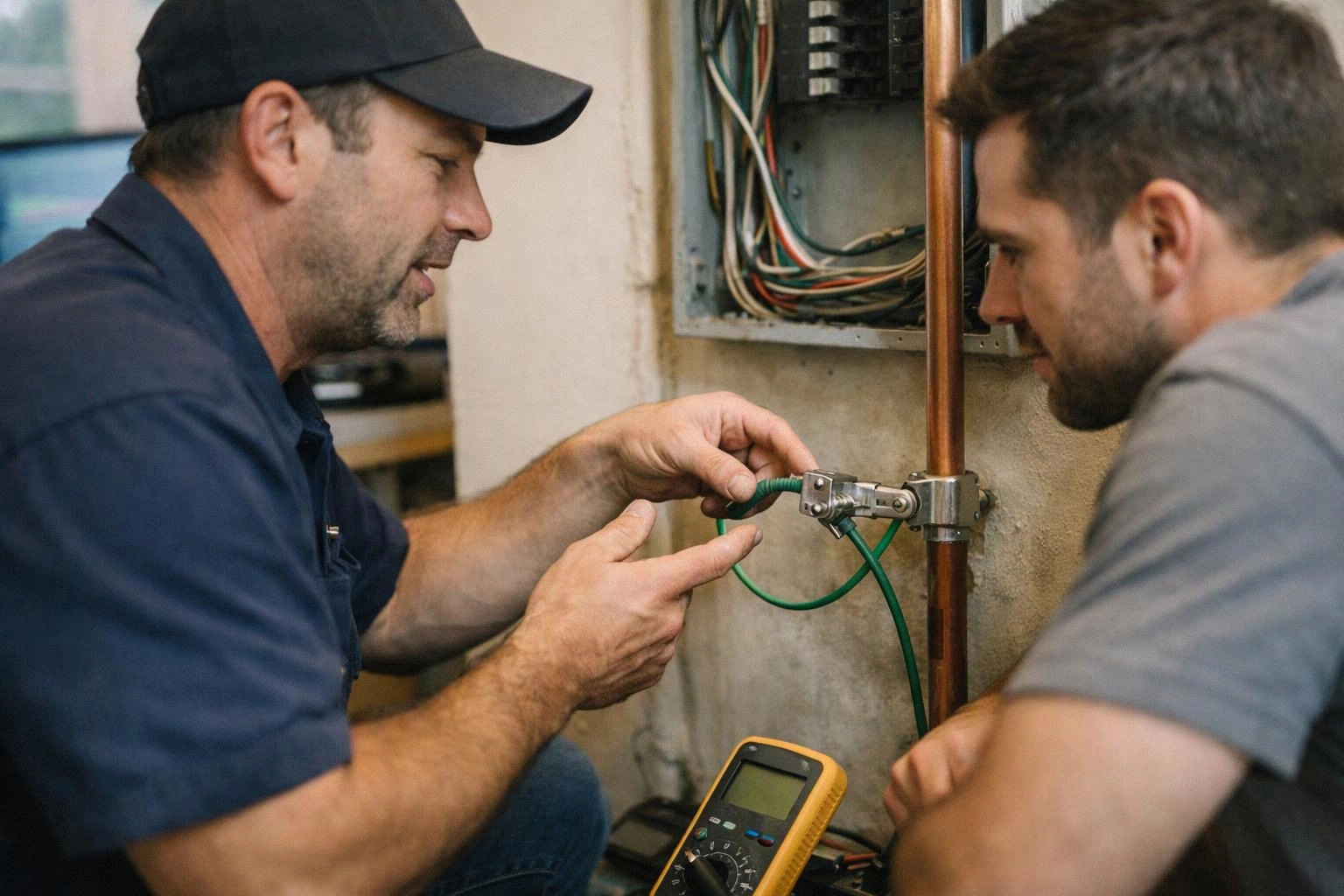
When we inspect electrical bonding, we trace connections between service equipment, enclosures, raceways, and grounding conductors. We look for loose, corroded, altered, or missing bonding connections. Our team also checks continuity where the installation makes that test appropriate.
Electrical Bonding in Practice: A Real-World Example
During an Electrical Safety Inspection, a metal service enclosure may need a bonding connection to the grounding path. The inspection checks whether that connection is present, secure, and continuous through the relevant equipment.
Related Services
Related Terms
Electrical Grounding
Electrical Grounding is a planned connection between an electrical system and the earth or another conductive…
Ground Rod
A ground rod is a metal electrode installed in the earth and connected to a building’s…
Service Entrance
A service entrance is the point where electrical power enters a building from the utility system…
Service Electric
Have Questions About Electrical Bonding?
Contact Service Electric for practical guidance on Electrical Bonding and related 24 hour electrician work in Victoria.