What Is Thermal Imaging?
Thermal Imaging is a noncontact inspection method that uses an infrared camera to show heat patterns across surfaces. Electrical professionals read these patterns to identify unusual warmth at panels, connections, conductors, and equipment. The method helps locate areas that deserve closer testing, but an image alone does not prove the exact cause of a fault.
Quick Facts About Thermal Imaging
Category
Diagnostic inspection method
Used for
Finding unusual electrical heat
Common confusion
It does not see through walls
Also called
Infrared Inspection, IR Inspection
Often discussed with
Electrical Safety Inspection, Electrical Troubleshooting
Key Takeaways About Thermal Imaging
- It shows surface heat patterns without physical contact.
- Unusual warmth points to an area needing closer testing.
- A bright image does not identify the fault by itself.
How Thermal Imaging Works
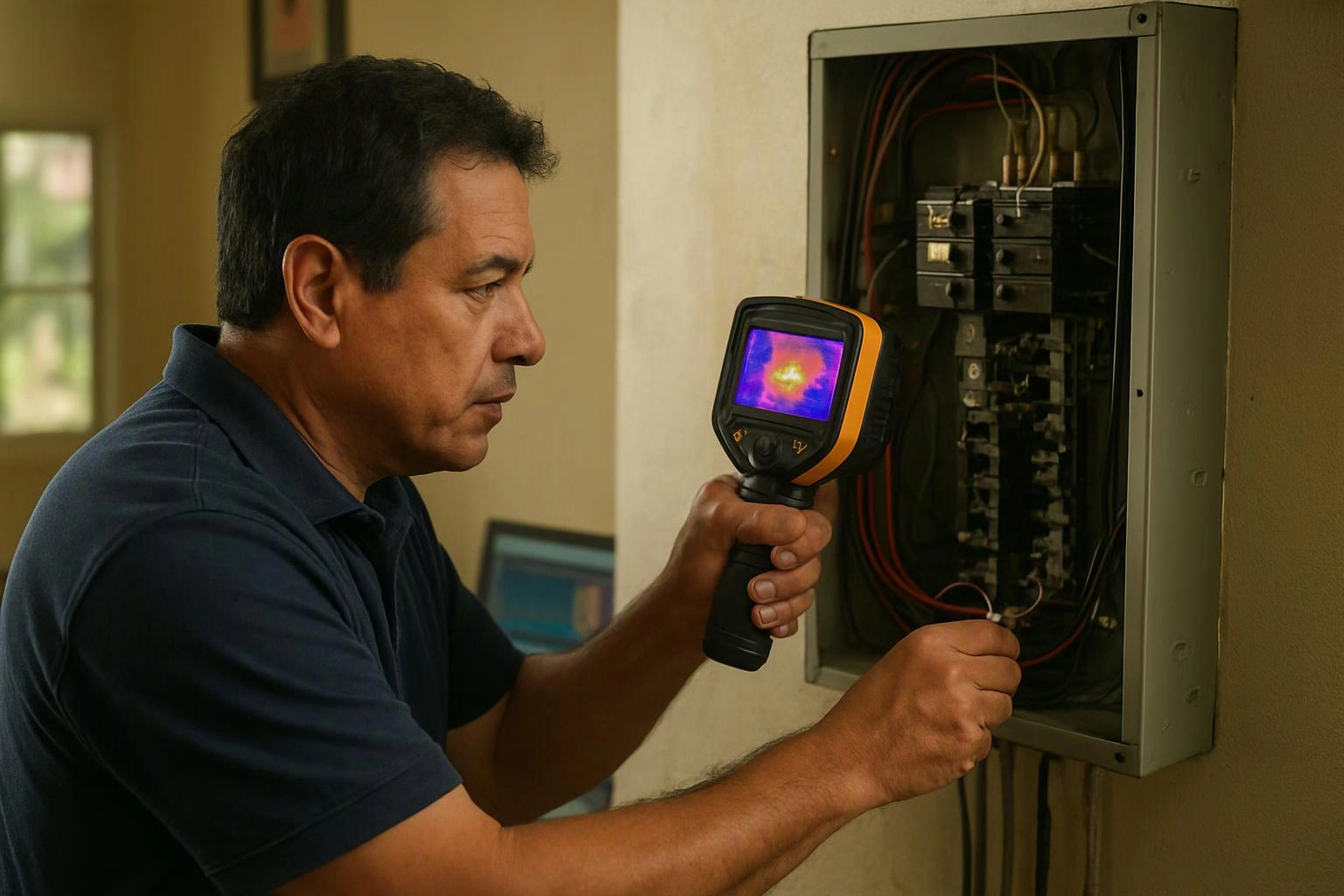
Thermal Imaging uses an infrared camera to detect heat emitted from a surface and display differences as an image. The camera does not measure electrical current directly. Instead, the image shows areas that appear warmer or cooler than nearby surfaces under similar operating conditions.
Related glossary terms: Circuit Load, Terminal Block, Hot Conductor.
An inspector scans accessible electrical equipment while circuits carry their normal load. A warm connection, terminal, or conductor can suggest resistance, an uneven connection, or excess demand. The image guides follow-up checks with standard electrical test equipment. Air movement, reflective surfaces, distance, and equipment load can affect the reading, so the image requires professional interpretation.
Electrical Safety Inspection Use
During an electrical safety inspection, infrared cameras can help compare related components and identify an unusual heat pattern. The inspection still includes visual checks and electrical testing. Thermal imaging supports those methods by showing conditions that may not be visible during a routine look.
From the Service Electric team
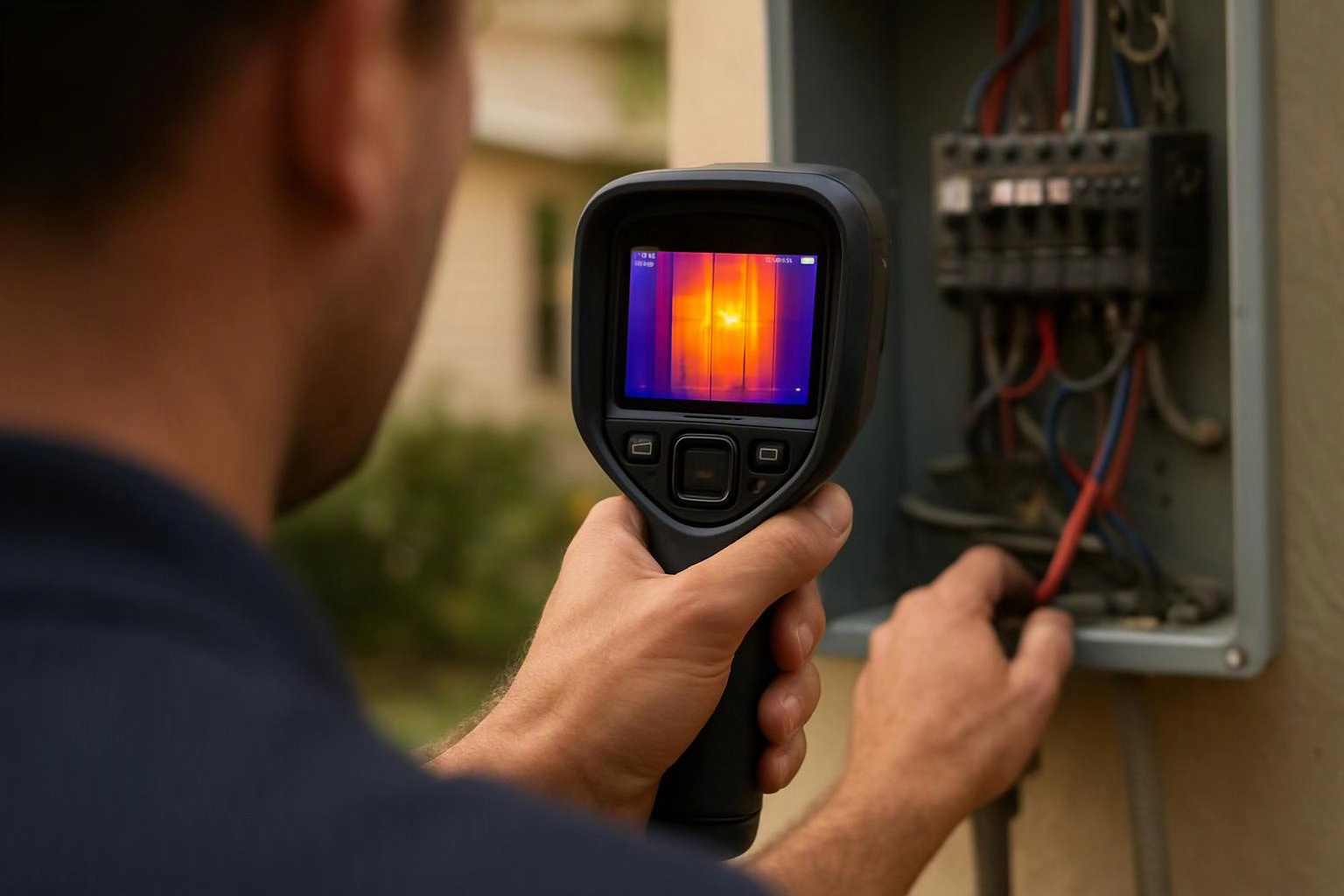
When we use thermal imaging during an Electrical Safety Inspection, we scan accessible equipment under normal operating conditions and compare related components. We document unusual patterns, then verify them with visual inspection and appropriate electrical testing before discussing the finding.
Thermal Imaging in Practice: A Real-World Example
A thermal image of a loaded electrical panel shows one termination warmer than nearby terminations. The inspector checks the connection, conductor, and circuit load to determine whether the pattern reflects a connection issue or another operating condition.
Related Terms
Circuit Load
Circuit Load is the electrical demand placed on a branch circuit by connected devices and equipment…
Terminal Block
A Terminal Block is an electrical connection device that joins wires to equipment or other circuits…
Hot Conductor
Hot Conductor is an energized wire that carries electrical potential from a source toward a load…
Service Electric
Have Questions About Thermal Imaging?
Contact Service Electric for practical guidance on Thermal Imaging and related 24 hour electrician work in Victoria.