Outlet Repair, Replacement, and GFCI Installation
Electrical outlet services are compared and explained for outlet repair, outlet replacement, and GFCI installation decisions. Service Electric checks the outlet, electrical wiring, grounding, electrical box, and location before recommending the safest solution.
Request an EstimateWhich Outlet Solution Fits the Problem?
The right outlet solution depends on whether the issue is limited to a repairable component, requires a new receptacle, or involves shock protection in a wet or outdoor location.
An outlet repair addresses a limited fault when the receptacle and electrical box remain suitable. Outlet replacement is used when the receptacle is damaged, worn, loose, or incompatible with the installation.
A GFCI outlet adds ground-fault protection where moisture can increase the risk of electrical shock. We inspect the circuit and location before choosing between a standard receptacle, tamper-resistant receptacle, or GFCI receptacle.
For service details, visit Outlet Repair.
Outlet Repair Compared With Outlet Replacement
Outlet repair may suit a limited, identifiable fault, while outlet replacement is more appropriate when the receptacle is damaged, worn, unsafe, or incompatible with the installation.
We compare the receptacle, electrical wiring, grounding, electrical box, and circuit access before deciding which service fits the problem. The quote scope reflects the work needed to correct the fault and leave the installation safe.
| Factor | Outlet Repair | Outlet Replacement |
|---|---|---|
| Cost drivers | Fault location, wiring condition, grounding, and circuit access. | New receptacle, electrical box condition, wiring work, grounding, and circuit access. |
| Installation timeline | Often involves a narrower scope when the fault is clearly identified. | May involve more work when the receptacle, box, or wiring requires correction. |
| Maintenance | Restores a suitable connection when the existing receptacle remains sound. | Provides a new receptacle when wear, damage, or compatibility is the concern. |
| Best for | A limited loose connection, terminal connection, or identifiable wiring fault. | A cracked, burned, worn, loose, or unsuitable receptacle. |
Repair is the better fit when the existing parts remain safe and serviceable. Replacement is the better fit when the receptacle or its supporting parts no longer provide a sound installation.
Advantages of Outlet Repair
Outlet repair can correct a limited fault while preserving suitable existing parts. We first identify the source of the problem so the repair does not hide a deeper wiring fault.
Best for: outlet repair is best for a limited, identifiable problem with safe supporting components.
Advantages of Outlet Replacement
Outlet replacement restores the connection when the existing receptacle is no longer safe, reliable, or suitable for the location. We also inspect the electrical box and wiring before fitting the new device.
Best for: outlet replacement is best when wear, damage, compatibility, or box condition makes repair unsuitable.
When Should an Outlet Be Repaired or Replaced?
An outlet should be assessed promptly when it is hot, cracked, discolored, loose, sparking, or associated with repeated breaker trips; Service Electric identifies whether repair or replacement addresses the underlying fault.
Burn marks, a cracked outlet, a loose plug, or a sparking outlet can indicate damaged contacts or wiring. Overheating can also point to a poor connection, excessive load, or another circuit problem.
A tripped circuit breaker may protect the circuit from an unsafe condition. We inspect the outlet and branch circuit before resetting a breaker repeatedly.
Stop using the outlet and keep away from exposed parts when there is an electrical shock, smoke, burning odor, or visible damage. Our team checks the source before restoring service.
Advantages of GFCI Outlet Installation
A GFCI outlet is a safety device that interrupts power when it detects an imbalance that may indicate current flowing through an unintended path. We install and test the device as part of the circuit and location assessment.
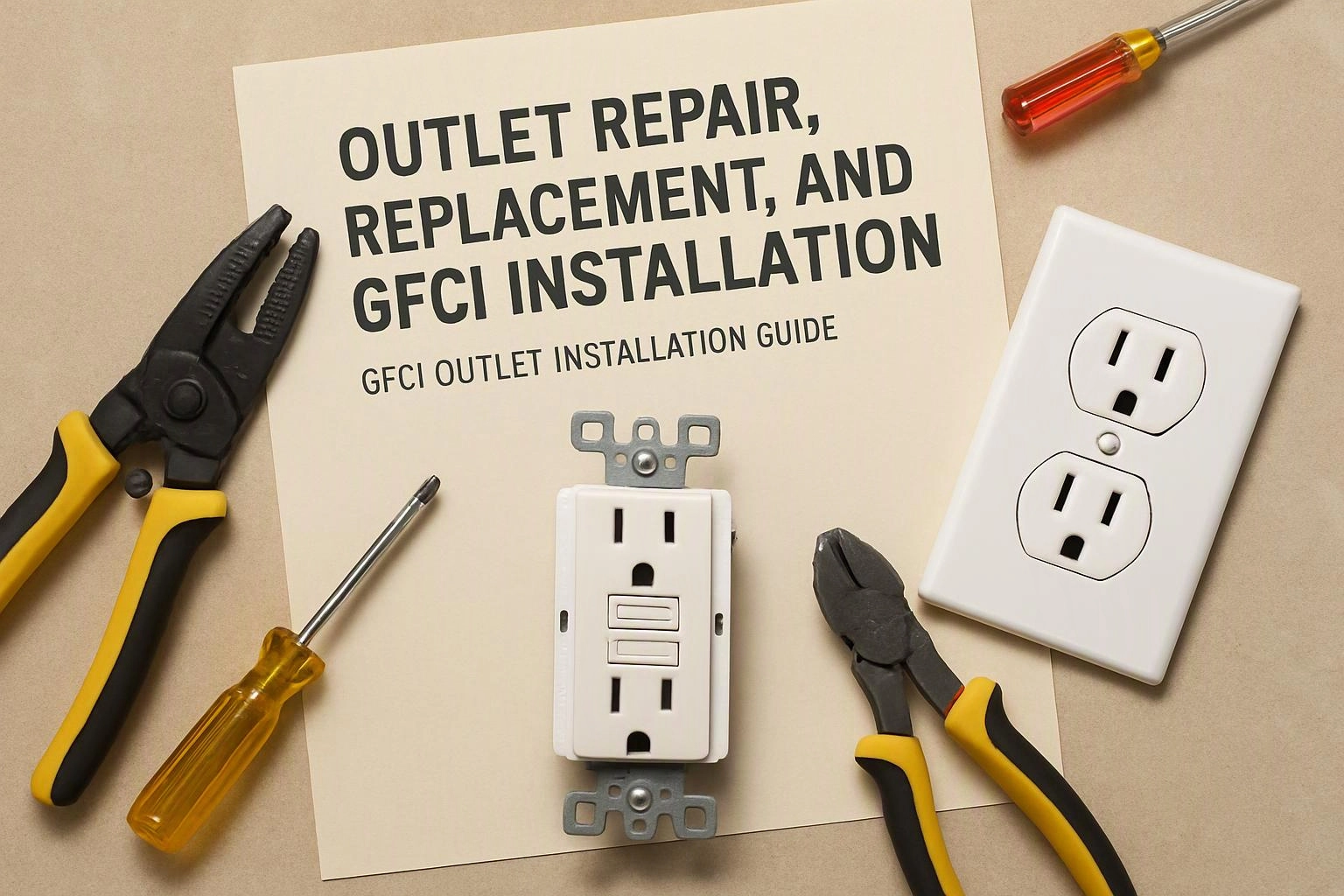
Best for: GFCI installation is best where the location or circuit conditions create increased exposure to water or moisture.
Where Is GFCI Installation Used?
GFCI installation is used where electricity may contact water or moisture, including kitchens, bathrooms, garages, laundry areas, and outdoor outlets.
A kitchen outlet may serve appliances near sinks or other moisture sources. A bathroom outlet requires careful attention to location, grounding, and nearby water.
Garages and laundry areas can contain grounded equipment, damp surfaces, or changing moisture conditions. An outdoor outlet needs protection suited to its wet location and exposure.
We check the circuit, enclosure, cover, grounding conductor, and nearby outlets before recommending a GFCI receptacle. A GFCI device may also provide protection to downstream outlets when the circuit is wired through its load terminals correctly.
How We Install and Check a GFCI Outlet
Service Electric installs and checks a GFCI outlet by identifying the circuit, isolating power, connecting the correct terminals, and testing the completed installation.
Our team explains the result of the test and identifies any remaining circuit issue before considering the work complete.
What Safety Checks Matter Before Outlet Work?
Electrical safety checks should confirm that the circuit is de-energized, the wiring and grounding are suitable, and the outlet problem is not caused by an overloaded or damaged circuit.
We perform power isolation and voltage testing before touching the electrical outlet. A circuit breaker being switched off is not treated as the only confirmation that the outlet is safe.
Our inspection considers grounding, the electrical box, conductor connections, and the presence of aluminum wiring. We also check for an overloaded circuit that could cause overheating or repeated trips.
These checks help us separate an outlet defect from a larger branch-circuit problem. We correct the underlying fault that the inspection identifies.
What Changes the Cost of This Outlet Work?
The cost of outlet work depends on the service selected, wiring and grounding conditions, electrical box access, circuit changes, and whether additional faults require correction; Service Electric explains the work included in an exact quote.
Outlet repair may involve a narrower scope when the receptacle, box, and wiring remain suitable. Outlet replacement or GFCI installation can require additional work when circuit access is limited or the wiring condition needs correction.
Grounding, electrical box condition, conductor connections, and the location of the outlet also affect the quote scope. We explain which tasks are included before work begins.
Request a quote through our contact page so we can review the outlet and define the work required.
When Is It Safer to Call Service Electric?
Service Electric should handle outlet work when the outlet sparks, smells burned, exposes wiring, feels hot, is near water, or remains faulty after the circuit is reset.
A sparking outlet, burning smell, exposed wiring, or hot receptacle can signal a serious electrical fault. Do not use the outlet until our team has inspected it.
A wet outlet can create a shock hazard even when the circuit breaker has not tripped. We isolate the circuit, check for damage, and determine whether repair, replacement, or GFCI installation is appropriate.
Call Service Electric when a circuit breaker repeatedly trips or the outlet problem returns after a reset. Our closing assessment focuses on electrical safety and the condition of the full circuit.
Questions About Outlet Repair and GFCI Installation
Can a loose electrical outlet be repaired?
Yes, a loose electrical outlet can be repaired when the receptacle, electrical box, and wiring remain safe and suitable. Service Electric checks the box, terminal connections, grounding, and mounting before choosing repair or replacement.
Why does a GFCI outlet keep tripping?
A GFCI outlet can keep tripping because of moisture, a ground fault, damaged wiring, an appliance fault, or an incorrect line and load connection. We test the outlet and circuit to identify the cause before resetting the device.
Can a GFCI outlet protect other outlets on the same circuit?
Yes, a GFCI outlet can protect downstream outlets when the circuit is wired through the correct load terminals and the installation is suitable. We identify the circuit connections and test the related outlets after installation.
Should an outdoor outlet be replaced with a GFCI outlet?
Yes, an outdoor outlet should be assessed for GFCI protection because outdoor locations are exposed to moisture. We check the receptacle, cover, grounding, wiring, and circuit before installing or replacing the outlet.
What should you do when an outlet feels hot?
Stop using an outlet that feels hot and call Service Electric for an inspection. Heat can indicate a loose connection, overload, damaged receptacle, or wiring fault.