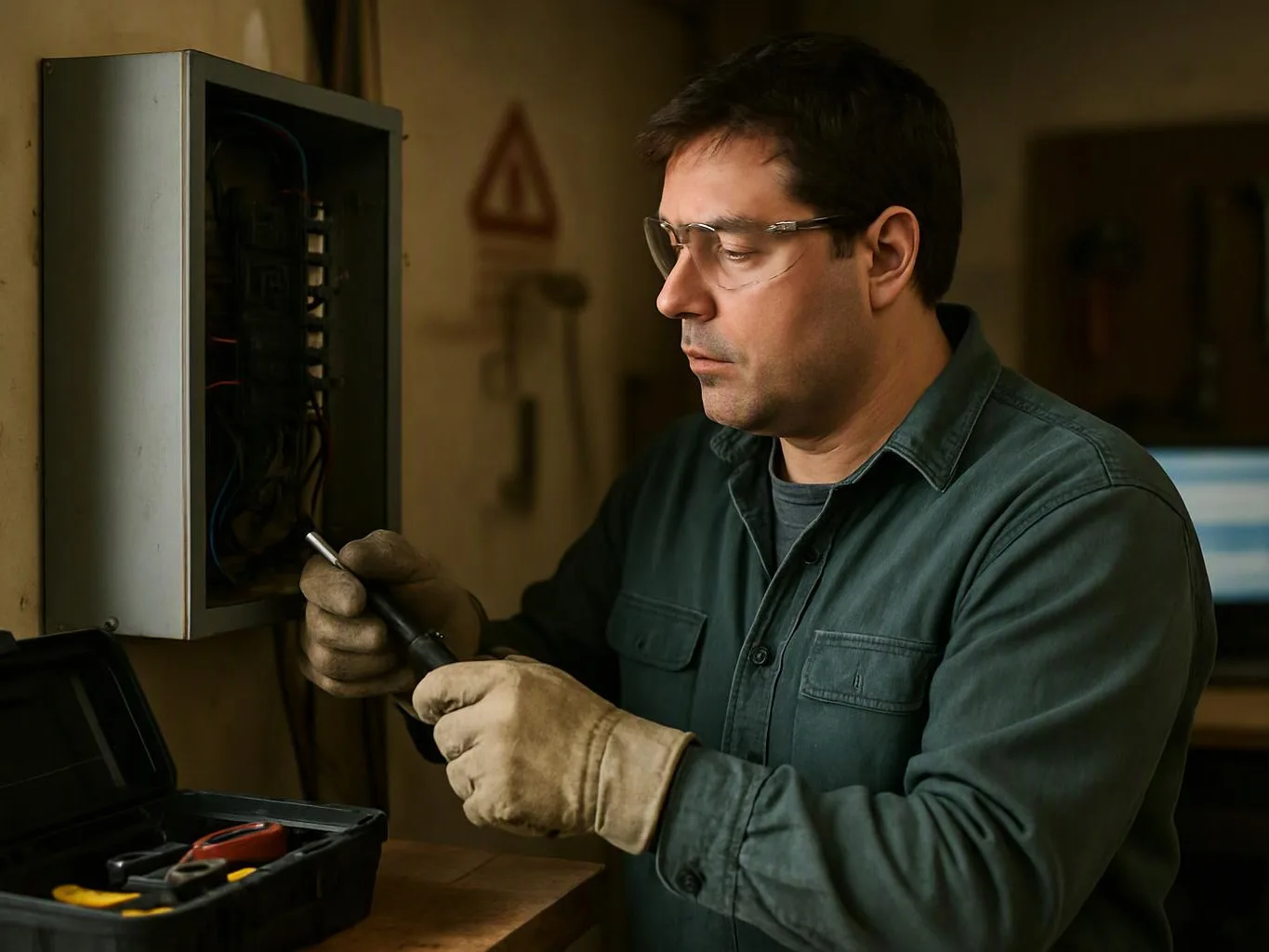
Describe the fan symptom
We note the noise, wobble, speed loss, light fault, or control problem and review what changed.
We repair ceiling fans for homes and businesses in Victoria. Our licensed and insured electricians check the fan, wiring, mounting, and controls.
A stable mount reduces wobble and strain on the fan.
A tested control path helps the fan respond to its switch or remote.
Corrected wiring supports safe operation for the fan and its light kit.
Ceiling fan repair is an electrical service that restores a fan's operation, support, controls, or wiring.

Ceiling fan repair starts with diagnosis, not part swapping. We check the fan body, blades, mounting hardware, wall switch, remote receiver, and visible wiring. The right repair depends on the fault and the fan's condition. A loose blade may need adjustment, while a damaged motor or support box may require part replacement or a broader electrical repair. Buyer fit matters here. Repair makes sense when the fan is sound and the fault is limited. Replacement may be the better choice when the motor, housing, or support has extensive damage, and we explain that choice before work begins. A ceiling fan with a burning smell, sparking, or a warm switch plate needs prompt attention. We prioritize safety during the inspection and isolate unsafe parts before discussing the next step.
We note the noise, wobble, speed loss, light fault, or control problem and review what changed.
We check blades, screws, housing, support, wall controls, remote parts, and visible connections.
We test the relevant circuit and control path, then identify whether the issue sits in the fan or supply wiring.
We adjust, repair, or replace the affected part with suitable tools and materials for the job.
We run the controls, check stability, and verify the repaired fan before we leave the work area clean.
A few details help us scope the fan problem before the visit.
We assess the fan, controls, mounting, and wiring before recommending a repair suited to the actual fault.
We isolate unsafe fan circuits and check heat, loose parts, and exposed connections during each repair.
We test fan and light operation, explain the completed work, and leave the area clean after service.
Access to the fan and details about its symptom help us prepare for the repair.
These details help us focus the inspection.
Share the fan symptom and property details for a clear quote; urgent requests get priority scheduling.
A fan that wobbles after starting may have loose blade hardware, uneven blades, or movement at the ceiling mount. The issue matters because continued vibration can stress the support point and create noise. Turn the fan off if movement is severe, then tell us whether the light and speed controls still work. We’ll inspect the fan, mount, and control path.
A steady hum paired with weak airflow can point to a control, capacitor, motor, or connection problem. The sound alone does not identify the failed part, so replacing a switch without testing may miss the cause. Note whether the hum changes with speed, keep the fan off if the housing feels hot, and request a diagnosis from our team.
A ceiling fan may still spin while its light kit stays dark. The fault can sit in the socket, bulb connection, pull chain, wall control, receiver, or wiring. Check the switch position and bulb only if the fixture is cool and safe to reach. We’ll test the light path and fan controls before recommending a repair or replacement.