
What Is a Battery Inverter?
Battery Inverter is a power conversion device that changes the direct-current electricity stored in a home battery into alternating-current electricity for household circuits. The device can also convert alternating-current power into direct-current power during charging. In backup systems, controls within the inverter help supply selected loads when normal utility power is unavailable.
Quick Facts About Battery Inverter
Category
Power conversion equipment
Used for
Home supporting system upgrades
Common confusion
A battery inverter is not the battery itself
Also called
Inverter Charger, Battery Energy Storage Inverter
Often discussed with
Standalone home battery critical-load backup installation
Key Takeaways About Battery Inverter
- It converts power between battery storage and household circuits.
- Its settings help direct backup power to selected critical loads.
- It is not the same as a battery or a transfer switch.
How Battery Inverter Works
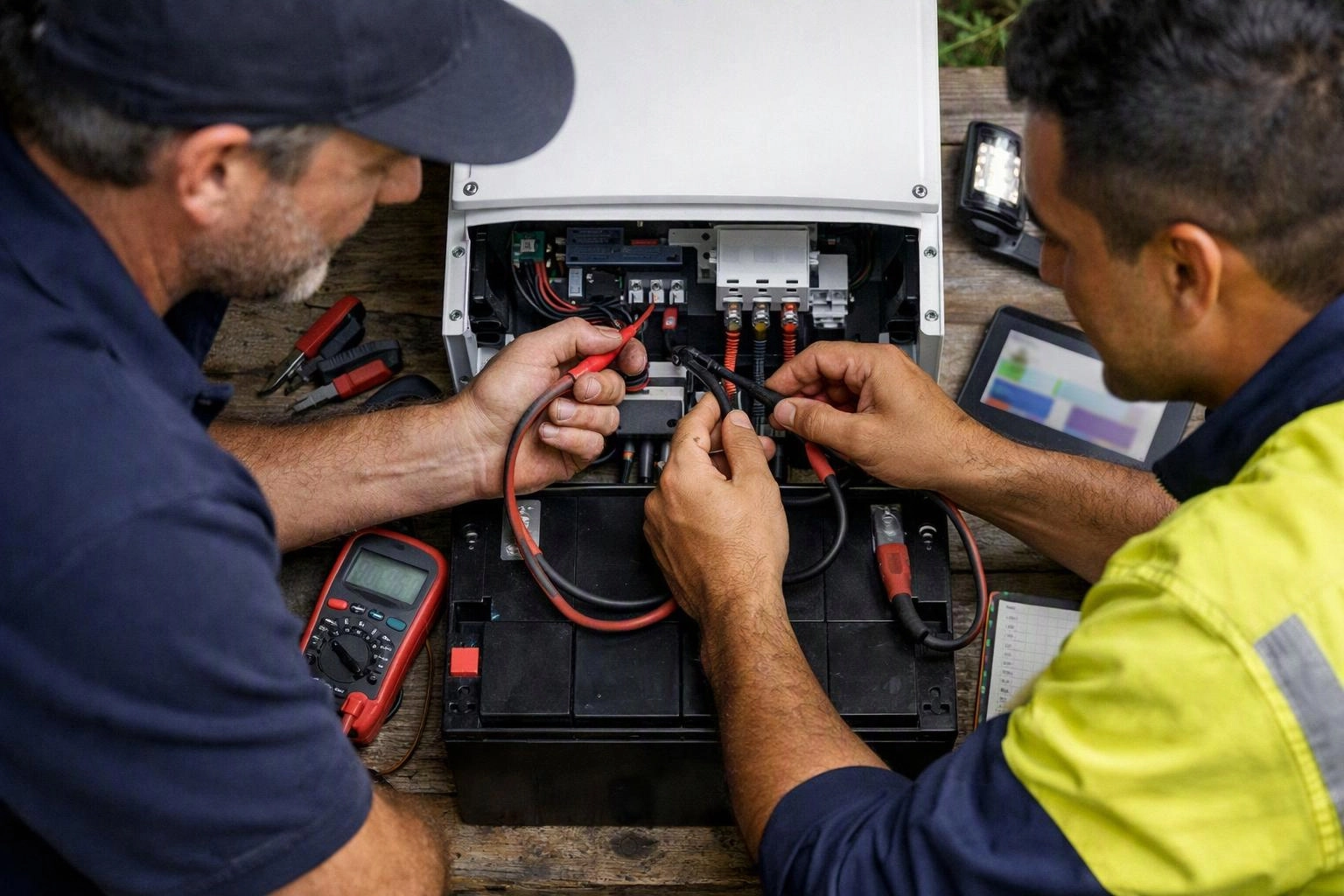
A battery inverter manages the electrical exchange between a battery and connected household circuits. Batteries store direct-current power, while most household equipment uses alternating-current power. The inverter changes the stored power into a usable form and can reverse that process during charging.
Related glossary terms: Critical Loads, Inverter Islanding, Automatic Transfer Switch.
In a critical-load backup system, the inverter follows the system design to supply selected circuits during an outage. A load center may separate those circuits from other household loads. The inverter also works with an automatic transfer switch or integrated switching equipment to keep backup power separated from utility power. The practical result is controlled backup power for loads such as refrigeration, lighting, communications equipment, or selected heating controls.
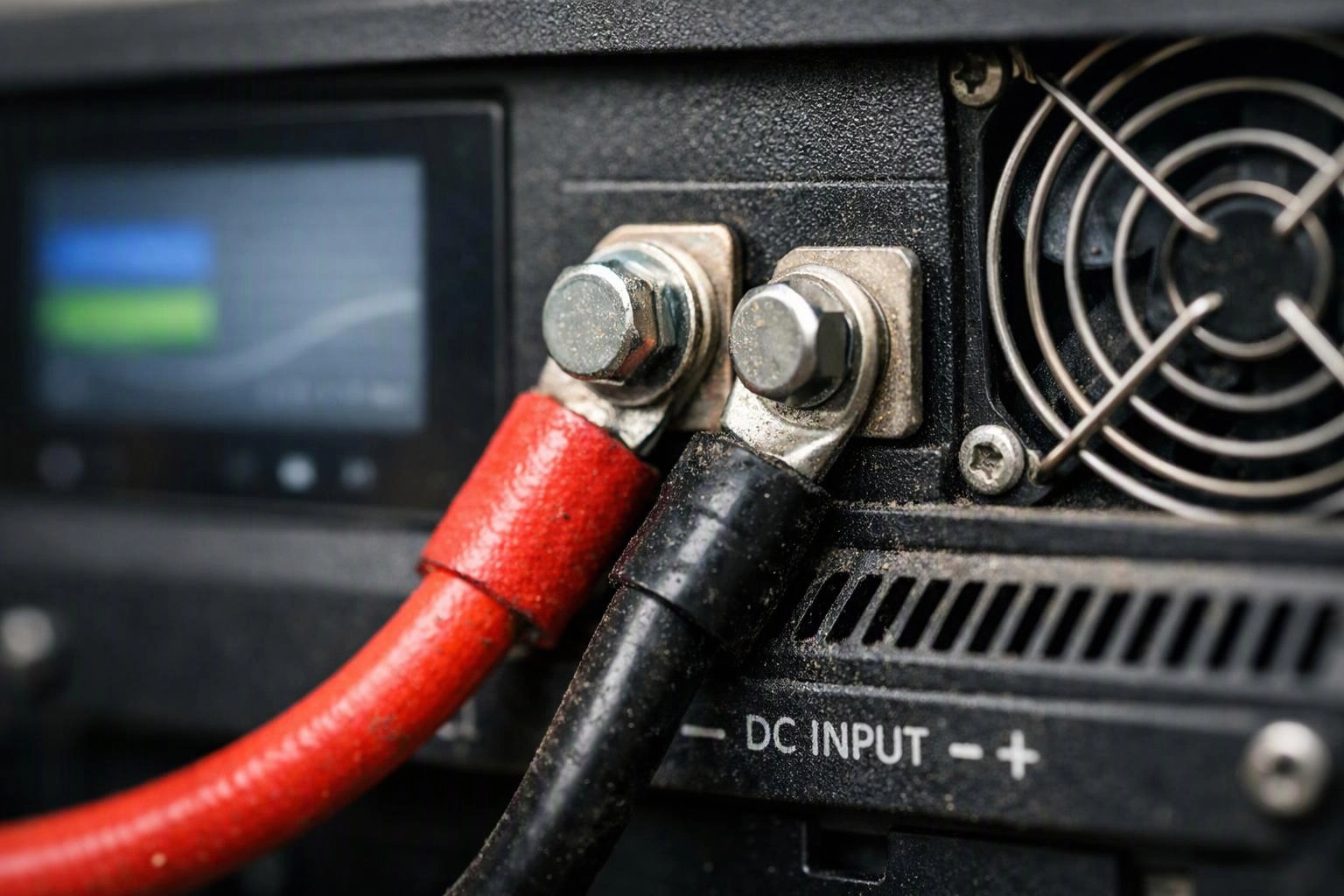
From the Service Electric team
When we work on a standalone home battery critical-load backup installation, we check the inverter’s connections, settings, grounding path, and relationship to the selected loads. We also trace the backup circuits so the installed equipment matches the intended operating plan.
Battery Inverter in Practice: A Real-World Example
A Victoria, Texas home may use a battery inverter to supply a refrigerator, selected lights, and communications equipment during a utility outage. The inverter directs stored battery power to those designated circuits while other household loads remain outside the backup system.
Related Terms
Critical Loads
Critical Loads are selected electrical circuits or devices that receive priority power during an outage. A…
Inverter Islanding
Inverter Islanding is a condition in which an inverter keeps supplying power to a section of…
Automatic Transfer Switch
An Automatic Transfer Switch is a control device that moves selected electrical loads between a utility…
Load Calculation
Load Calculation is the process of estimating the electrical demand that a building and its circuits…
Service Electric
Have Questions About Battery Inverter?
Contact Service Electric for practical guidance on Battery Inverter and related 24 hour electrician work in Victoria.