
What Is Inverter Islanding?
Inverter Islanding is a condition in which an inverter keeps supplying power to a section of an electrical system after the utility grid has lost power. Detection and disconnection controls separate the inverter from the grid, helping protect utility workers and prevent unstable voltage or frequency on the isolated circuit.
Quick Facts About Inverter Islanding
Category
Inverter safety function
Used for
Grid-connected backup systems
Common confusion
Confused with intentional backup islanding
Also called
Islanding
Often discussed with
Bidirectional electric-vehicle home backup integration
Key Takeaways About Inverter Islanding
- The inverter forms a separated electrical island after grid power fails.
- Controls must detect grid loss and open the connection.
- Inverter islanding is not the same as ordinary battery backup.
How Inverter Islanding Works
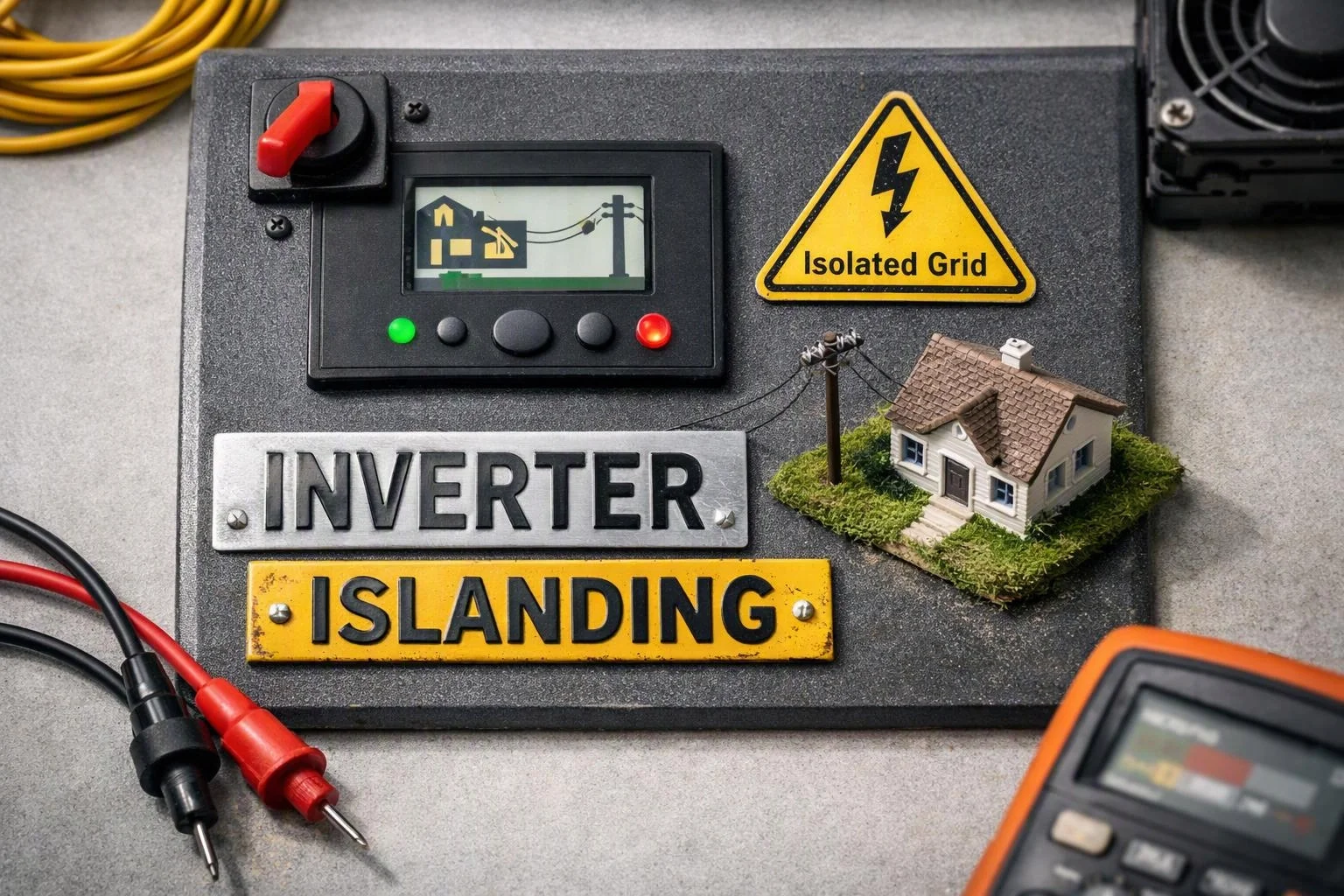
Inverter islanding begins when grid-connected equipment detects a change in utility voltage or frequency. The inverter's anti-islanding controls then stop energizing the utility conductors or open an approved isolation device. The action separates the backup system from the wider grid while preserving power for circuits designed to operate independently.
Related glossary terms: Battery Inverter, Automatic Transfer Switch, Critical Loads.
A bidirectional electric-vehicle system can support selected home circuits after isolation occurs. The system monitors the isolated section and manages the available battery power as household loads change. An automatic transfer switch or integrated inverter equipment may perform the separation, depending on the system design. Correct wiring keeps backup conductors and utility conductors from becoming connected during the outage.
From the Service Electric team
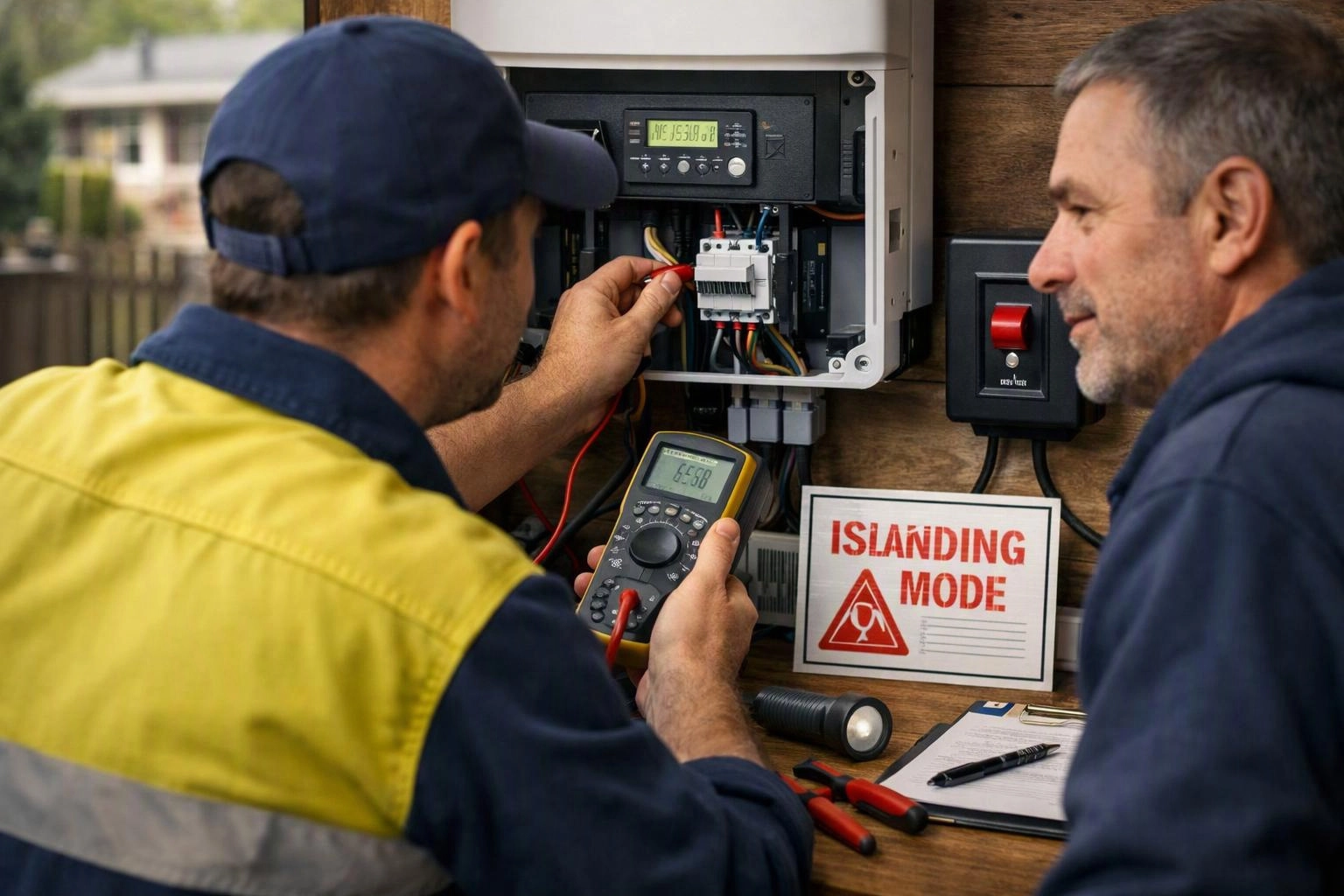
When we work on bidirectional electric-vehicle home backup integration, we verify how the inverter detects grid loss and how the system separates backup circuits. We also check conductor labeling, transfer equipment, grounding paths, and the connection between the vehicle, inverter, and selected loads. Our focus is safe isolation under outage conditions.
Inverter Islanding in Practice: A Real-World Example
A home uses a bidirectional electric vehicle to supply selected circuits during a utility outage. The inverter detects the outage, isolates the home backup section from utility conductors, and then supplies the designated loads from the vehicle.
Related Services
Related Terms
Battery Inverter
Battery Inverter is a power conversion device that changes the direct-current electricity stored in a home…
Automatic Transfer Switch
An Automatic Transfer Switch is a control device that moves selected electrical loads between a utility…
Critical Loads
Critical Loads are selected electrical circuits or devices that receive priority power during an outage. A…
Electrical Grounding
Electrical Grounding is a planned connection between an electrical system and the earth or another conductive…
Service Electric
Have Questions About Inverter Islanding?
Contact Service Electric for practical guidance on Inverter Islanding and related 24 hour electrician work in Victoria.