
What Are Critical Loads?
Critical Loads are selected electrical circuits or devices that receive priority power during an outage. A backup system supplies these loads while leaving nonessential circuits disconnected or inactive. Common examples include refrigeration, medical equipment, communications equipment, lighting, and selected receptacles. The list depends on household needs, backup capacity, and the design of the electrical system.
Quick Facts About Critical Loads
Category
Backup power planning
Used for
Essential circuits during outages
Common confusion
A priority list, not a complete home load
Also called
Essential Loads, Backup Loads
Often discussed with
Standalone home battery critical-load backup installation
Key Takeaways About Critical Loads
- Critical loads receive priority during backup operation.
- The selected circuits must match available battery capacity.
- Critical loads are not the same as every household circuit.
How Critical Loads Works
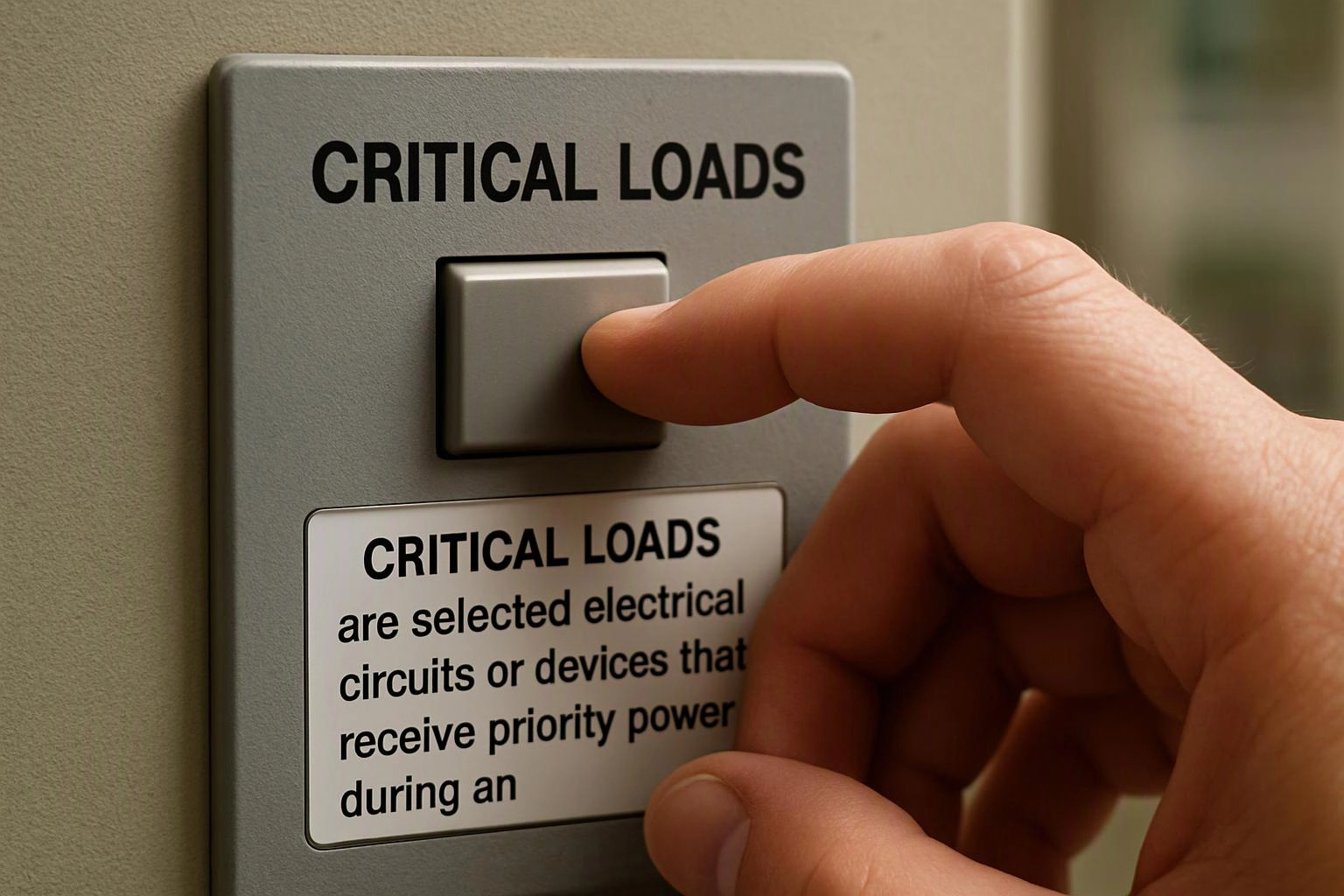
Critical Loads work through a backup system that separates selected circuits from less essential electrical demand. A battery inverter supplies those circuits when utility power is unavailable. The system monitors available power and keeps the selected loads within the battery system's operating limits.
Related glossary terms: Battery Inverter, Circuit Load, Load Calculation.
Load selection begins with the functions you need during an outage. Refrigeration, basic lighting, communications equipment, and selected outlets may belong on the backup panel. Large heating or cooling equipment may require careful review because its starting demand can affect the available backup power. A load calculation helps match the selected circuits with the system design. The result is a defined group of circuits that can operate together during an outage.

From the Service Electric team
When we plan a critical-load system, we review the circuits connected to the proposed backup panel and identify the equipment that must remain available. We also check the expected electrical demand, circuit arrangement, and transfer equipment so the selected loads match the battery system design.
Critical Loads in Practice: A Real-World Example
A Victoria, Texas home may place the refrigerator, selected lights, internet equipment, and a few receptacles on a battery backup panel. The battery then supports those circuits during an outage while other household circuits remain outside the critical-load group.
Related Terms
Battery Inverter
Battery Inverter is a power conversion device that changes the direct-current electricity stored in a home…
Circuit Load
Circuit Load is the electrical demand placed on a branch circuit by connected devices and equipment…
Load Calculation
Load Calculation is the process of estimating the electrical demand that a building and its circuits…
Automatic Transfer Switch
An Automatic Transfer Switch is a control device that moves selected electrical loads between a utility…
Service Electric
Have Questions About Critical Loads?
Contact Service Electric for practical guidance on Critical Loads and related 24 hour electrician work in Victoria.