Hot Tub and Pool Electrical Installation Safety
Hot tub wiring safety and pool electrical installation require correctly sized circuits, GFCI protection, grounding, bonding, weather-resistant equipment, and inspection. Service Electric checks the electrical layout, equipment connections, protective devices, and site conditions before completing the work.
Request an Estimate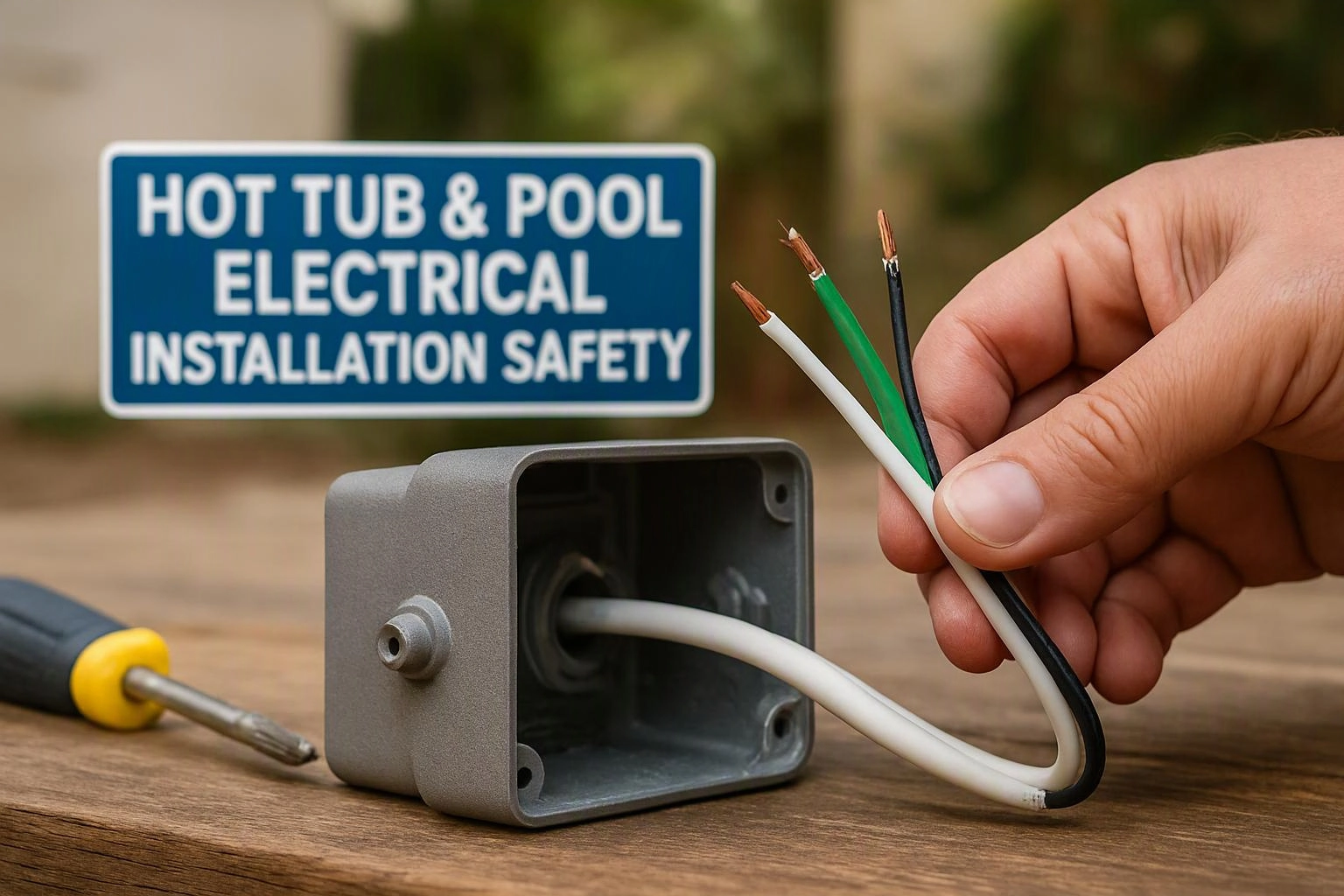
What Makes Hot Tub Wiring Safe?
Hot tub wiring is safe when the circuit, disconnect, grounding, bonding, and GFCI protection match the equipment requirements and applicable electrical rules.
A hot tub branch circuit must be sized for the hot tub control pack and its connected load. GFCI protection helps reduce shock risk by interrupting power when current takes an unintended path.
We install a suitable disconnecting means, equipment grounding conductor, and bonding connections. Outdoor wiring also needs weather-resistant equipment and an enclosure suited to the wet location.
When Do Hot Tub Wiring and Pool Electrical Installation Belong in the Same Project?
Hot tub wiring and pool electrical installation belong in the same project when one property has multiple water-related electrical systems that must be coordinated for safe operation. Coordinating the work helps keep equipment locations, protective devices, and bonding connections consistent.
How Do Hot Tub Wiring and Pool Electrical Work Together?
Hot tub wiring and pool electrical installation work together through coordinated load planning, protective device selection, bonding, equipment placement, and project sequencing. Our team reviews the complete project scope so one installation does not create problems for another.
What Should Be Checked Before a Hot Tub or Pool Circuit Is Installed?
The electrical panel, equipment requirements, circuit route, disconnect location, wet-location conditions, and inspection requirements should be checked before installation begins. We use the manufacturer installation instructions and site conditions to plan the work.
How Service Electric Approaches Hot Tub and Pool Electrical Installation
Service Electric reviews the equipment requirements and site conditions, installs the required electrical components, and checks protective devices, grounding, bonding, and connections before completion.
We begin with a load assessment that considers the electrical panel, circuit route, equipment location, and service capacity. Our crew then installs the circuit, disconnect, conduit, grounding conductor, bonding conductor, and weather-resistant enclosure required for the project.
We complete GFCI testing and inspect the equipment connection, grounding continuity, bonding continuity, and enclosure condition. Our Hot Tub Wiring service can be coordinated with pool electrical installation when both systems are part of the same project.
Which Safety Problems Require Electrical Attention?
GFCI tripping, exposed wiring, corrosion, water intrusion, damaged disconnects, loose connections, and improper bonding require the electrical installation to be assessed before continued use.
Repeated trips can indicate a fault in the equipment, wiring, or protective device. Exposed conductors, corrosion, and water intrusion can also increase electrical safety risks.
We inspect the affected circuit, disconnect, enclosure, equipment connection, grounding, and bonding. Do not continue using equipment when wiring is damaged or water has entered an electrical enclosure.
What Changes the Cost of This Electrical Installation?
The cost changes with circuit distance, available panel capacity, trenching or conduit needs, equipment requirements, bonding work, site access, and inspection requirements. Service Electric can assess these conditions and provide an exact quote for the defined work.
Longer or more complex circuit routes can require additional conduit and installation work. Panel changes, difficult access, underground routing, equipment-specific requirements, and combined pool and hot tub scope can also affect the quote.
Our quote is based on the observed site conditions, required materials, circuit installation, protective devices, equipment connections, and inspection-related work.
How Can Homeowners Prepare for a Safe Installation?
Homeowners can prepare by keeping the equipment specifications available, providing access to the panel and work area, and avoiding use of affected equipment until the installation is checked. Clear preparation helps us verify the work area and follow the manufacturer requirements.
What Should Be Confirmed After the Work Is Complete?
After installation, the GFCI, disconnect, grounding, bonding, enclosures, equipment connections, and required inspection should be confirmed before the hot tub or pool equipment is used.
We verify that the disconnect operates as intended and that the weather-resistant enclosure is properly closed and protected. We also check grounding continuity, bonding continuity, conductor connections, and equipment placement.
Final GFCI testing and electrical inspection help confirm that the completed work matches the equipment requirements and applicable electrical rules.
Which Questions Should You Ask Before Scheduling the Work?
Before scheduling, ask which equipment specifications apply, how the circuit will be sized, where the GFCI protection and disconnect will be placed, and how grounding, bonding, and inspection will be handled.
Ask whether the electrical panel has the required capacity and whether the circuit route needs conduit or trenching. Confirm that the scope includes the equipment connection, weather-resistant enclosure, protective device testing, and required inspection.
Service Electric can review the equipment information and site conditions with you so the defined work and quote are clear before installation begins.
Questions About Hot Tub and Pool Electrical Safety
Why does a hot tub need GFCI protection?
Service Electric installs and tests GFCI protection because a hot tub combines electrical equipment with water, and GFCI protection can interrupt power when current follows an unintended path.
What is the difference between grounding and bonding for a pool?
Grounding provides a path for fault current through the electrical system, while bonding connects accessible metal parts so they remain at a similar electrical potential. We check both systems as part of pool electrical installation.
Where should a hot tub disconnect be located?
A hot tub disconnect should be located where it is accessible for safe shutdown while meeting applicable electrical rules and the equipment instructions. We review the hot tub location, access path, wet location, and disconnecting means before installation.
Can pool lights and a hot tub share an electrical circuit?
Pool lights and a hot tub can share a circuit only when the equipment requirements, circuit sizing, protective devices, and applicable electrical rules allow it. We review the connected load and manufacturer instructions before deciding how the circuits should be arranged.
What should I do if my hot tub GFCI keeps tripping?
Stop using the hot tub and arrange an electrical assessment if the GFCI keeps tripping. We inspect the GFCI device, circuit, connections, equipment, grounding, and bonding to identify the cause before continued use.
Service Electric can review your hot tub wiring or pool electrical installation, explain the required scope, and provide an exact quote based on the equipment and site conditions.
Related Resources
How to Prepare for an Emergency Electrical Repair Visit
What Goes With ItCommercial Electrical Repair and Installation Planning
What Goes With ItPlanning Indoor, Outdoor, and Specialty Lighting Installation
What Goes With ItWhole-Home Surge Protection: Planning and Installation Questions