Smoke and Carbon Monoxide Detector Installation Planning
Smoke and carbon monoxide detector installation requires coordinated placement, power, wiring, testing, and safety planning. Service Electric checks the electrical conditions, installs the detectors, and verifies that the completed system works as intended.
Request an EstimateWhat Electrical Planning Covers for Detector Installation
Electrical planning determines where detectors belong, how they receive power, how connected alarms communicate, and how the completed installation will be tested.
A smoke detector senses particles from a fire and sounds an alarm. A carbon monoxide detector senses carbon monoxide from sources such as a fuel-burning appliance. We review both devices together so the life-safety system matches the rooms, sleeping areas, and electrical conditions.
Our team checks the power source, electrical circuit, junction box, and interconnection path before installation. We also plan alarm testing so each device and the system response can be checked after the work is complete.
When Smoke and Carbon Monoxide Installation Should Be Planned Together
Smoke and carbon monoxide detector installation should be planned together when one project changes room layouts, electrical circuits, sleeping areas, or potential carbon monoxide sources. Coordinating both services helps prevent missed coverage and conflicting mounting locations.
How Detector Placement and Wiring Affect the Installation
Detector placement affects coverage, accessibility, nuisance alarms, power reliability, and communication between interconnected alarms.
We assess ceiling and wall locations based on the room layout and the manufacturer’s installation requirements. Sleeping areas and hallways need careful planning because people may depend on those alarms for early warning. Kitchens and garages also need thoughtful placement because normal cooking activity, dust, or vehicle exhaust can contribute to nuisance alarms.
Electrical wiring affects how hardwired detectors receive power and communicate. We inspect the electrical circuit, junction box, and interconnect wire before connecting alarms. Our team verifies that interconnected alarms respond together and that a battery-operated detector is suitable where hardwiring is not part of the planned system.
How Smoke and Carbon Monoxide Services Work Together
The two services work together by coordinating the site assessment, electrical planning, installation sequence, interconnection, and final testing. This process helps define the project scope and installation cost drivers.
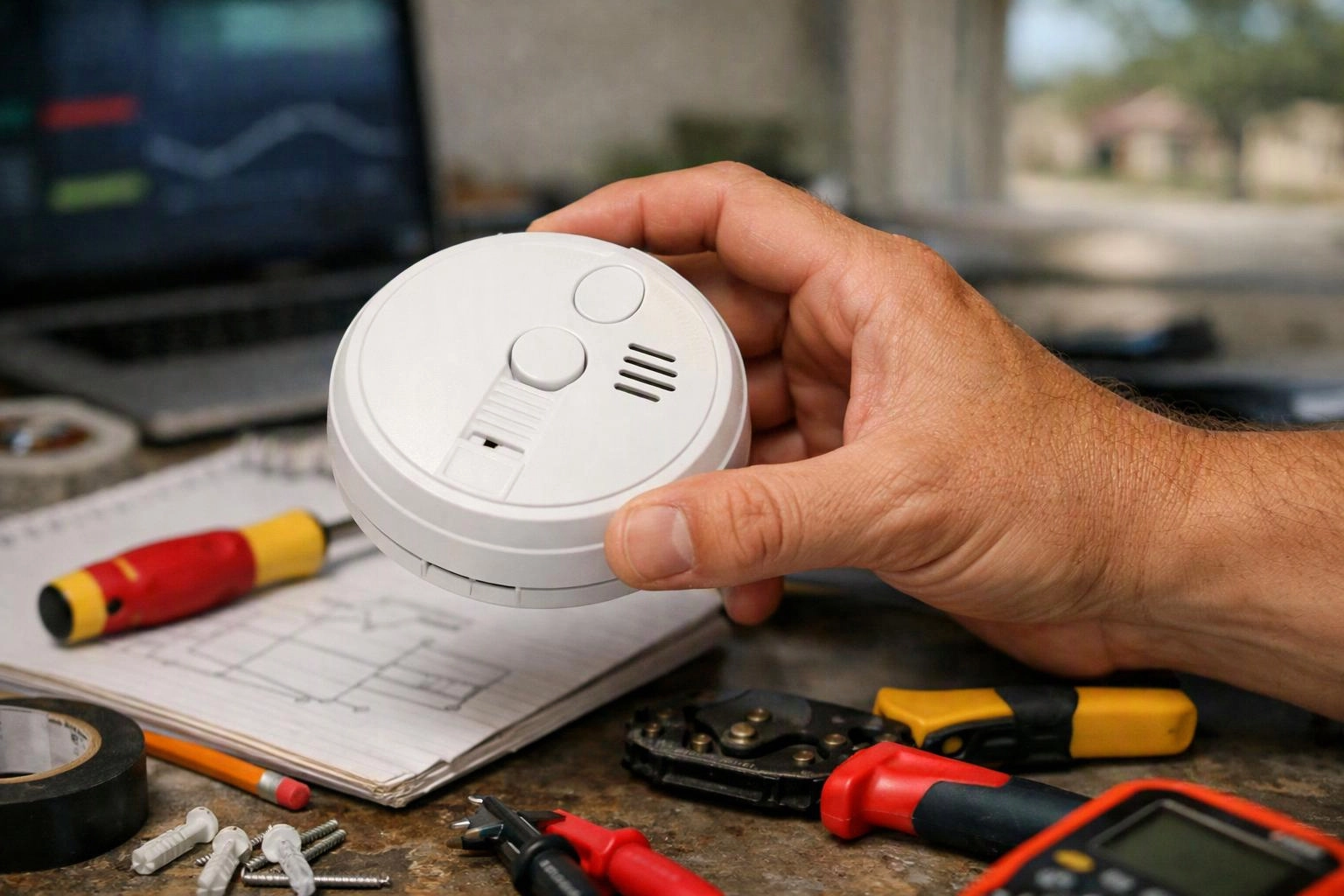
A Practical Smoke and Carbon Monoxide Detector Installation Checklist
A complete installation checklist covers the rooms, detector types, mounting locations, power connections, interconnection, alarm testing, and maintenance instructions. We use the checklist to connect the safety requirements with the electrical work.
How Service Electric Plans and Checks the Work
Service Electric reviews the property, checks the electrical conditions, plans detector placement, completes the installation, verifies operation, and explains what the project quote includes.
Our site review considers room use, sleeping areas, existing alarms, possible fuel-burning appliances, and the planned power source. We then match the smoke detector and carbon monoxide detector locations with the available electrical wiring and interconnection needs.
During the work, our team completes smoke detector installation and carbon monoxide detector installation, checks the junction boxes and wiring, and confirms battery backup where required. We finish with functional testing and explain the maintenance steps that support reliable operation.
The project quote reflects the conditions found during the electrical assessment, the detector types, the number and location of power connections, wiring changes, interconnection work, and testing needs. Contact us for an exact project quote based on the property and planned scope.
Questions About Detector Installation Planning
Can smoke and carbon monoxide detectors be installed on the same electrical circuit?
Yes, smoke and carbon monoxide detectors can share an electrical circuit when the planned circuit, wiring, device compatibility, and installation requirements support that arrangement. Service Electric checks the circuit and interconnection design before making the connections.
Should hardwired detectors have battery backup?
Yes, hardwired detectors should have battery backup when the selected device and installation requirements call for it. Battery backup helps the alarm remain available when normal electrical power is interrupted, and we verify the battery compartment and backup arrangement during installation.
What changes the cost of smoke and carbon monoxide detector installation planning?
The installation cost changes with detector type, mounting locations, existing electrical wiring, junction box access, power connections, interconnection needs, and testing requirements. We review those conditions and provide a project quote that reflects the actual scope.
How can interconnected detectors be tested after installation?
Interconnected detectors can be tested by activating the test function on each alarm and confirming that the connected devices respond as intended. We complete functional testing after installation and explain the maintenance checks for the system.
Contact Service Electric to review your detector placement, electrical wiring, power source, interconnection, and testing needs. Our team can explain the project scope and prepare an exact quote for the planned work.
Get a Free EstimateRelated Resources
How to Prepare for an Emergency Electrical Repair Visit
What Goes With ItCommercial Electrical Repair and Installation Planning
What Goes With ItPlanning Indoor, Outdoor, and Specialty Lighting Installation
What Goes With ItWhole-Home Surge Protection: Planning and Installation Questions